English
When Was Titanium Discovered?
Content
- 1 The Original Discovery in Cornwall, 1791
- 2 Klaproth's Independent Discovery and the Naming of Titanium
- 3 From Discovery to Pure Metal: A 119-Year Gap
- 4 The Kroll Process and the Birth of the Modern Titanium Industry
- 5 Why Titanium's Discovery Matters for Modern High Purity Applications
- 6 Common High Purity Titanium Forms and Their Uses
- 7 Key Takeaways on Titanium's Discovery and Its Legacy
Titanium was discovered in 1791 by the British clergyman and amateur mineralogist William Gregor, who identified a new metallic element while examining a black sand sample from a stream in Cornwall, England. A few years later, in 1795, the German chemist Martin Heinrich Klaproth independently isolated the same element from rutile ore and gave it the name "titanium," after the Titans of Greek mythology. Although the element was identified in the late 18th century, pure metallic titanium was not produced until 1910, and a commercially viable extraction process (the Kroll process) only emerged in the 1940s. This long gap between discovery and practical production explains why titanium remained a niche material for over a century before becoming essential to aerospace, medical, and industrial manufacturing.
The Original Discovery in Cornwall, 1791
William Gregor, a clergyman based in the parish of Manaccan, Cornwall, was also a keen mineralogist. While studying a heavy black sand found in a local stream, he noticed it contained an unusual metallic oxide that did not match any known element at the time. He named the mineral "menachanite," after the local parish, and published his findings describing what he believed to be a new metallic substance. Gregor's analysis was careful, but he lacked the means to isolate the pure metal, so the discovery initially attracted limited attention outside scientific circles.
Klaproth's Independent Discovery and the Naming of Titanium
In 1795, Martin Heinrich Klaproth, a respected German chemist known for identifying several elements, was studying a mineral called rutile. He found that rutile contained the same metallic oxide that Gregor had described four years earlier. Klaproth confirmed the existence of a new element and proposed the name "titanium," drawing inspiration from the Titans of Greek mythology to reflect the element's strength. This name was widely adopted, and Klaproth is often credited as the chemist who formally named the element, even though Gregor's earlier work was later recognized as the first identification.
From Discovery to Pure Metal: A 119-Year Gap
One of the most striking facts about titanium's history is how long it took to move from discovery to producing the pure metal. For over a century, scientists struggled because titanium reacts readily with oxygen, nitrogen, and carbon at high temperatures, making it extremely difficult to isolate in a pure form. It was not until 1910 that the American chemist Matthew A. Hunter successfully produced relatively pure titanium metal by heating titanium tetrachloride with sodium in a sealed steel container, a method now known as the Hunter process.
| Year | Milestone |
| 1791 | William Gregor identifies a new metallic oxide in Cornwall sand |
| 1795 | Martin Heinrich Klaproth names the element "titanium" |
| 1910 | Matthew A. Hunter produces relatively pure titanium via the Hunter process |
| 1940s | William Justin Kroll develops the Kroll process for industrial-scale production |
| 1950s onward | Titanium becomes a key material in aerospace, defense, and medical industries |
The Kroll Process and the Birth of the Modern Titanium Industry
The real turning point for titanium came in the 1940s, when Luxembourg-born metallurgist William Justin Kroll developed an improved reduction process using magnesium instead of sodium to reduce titanium tetrachloride. This method, now known as the Kroll process, became the foundation of the global titanium industry and remains the dominant production method today. Without this breakthrough, titanium would likely have remained a laboratory curiosity rather than the structurally important metal it is now.
Why Titanium's Discovery Matters for Modern High Purity Applications
Understanding the history of titanium helps explain why purity has become such a critical factor in its modern applications. Early production methods could not eliminate trace elements such as oxygen, nitrogen, and iron, which significantly affect titanium's mechanical and electrical properties. Today, industries such as semiconductor manufacturing, aerospace, and advanced materials research require titanium with extremely tight control over impurity levels, often expressed in terms of "5N" (99.999%), "6N" (99.9999%), or even "7N" (99.99999%) purity grades.
For example, in semiconductor fabrication, even parts-per-billion levels of certain impurities in titanium can affect thin-film deposition results, which is why semiconductor grade metals suppliers focus heavily on refining processes that go far beyond what was achievable in the early 20th century. Similarly, in superalloy materials used for jet engine components, controlled titanium purity directly affects fatigue resistance and high-temperature performance.
Common High Purity Titanium Forms and Their Uses
| Form | Typical Application |
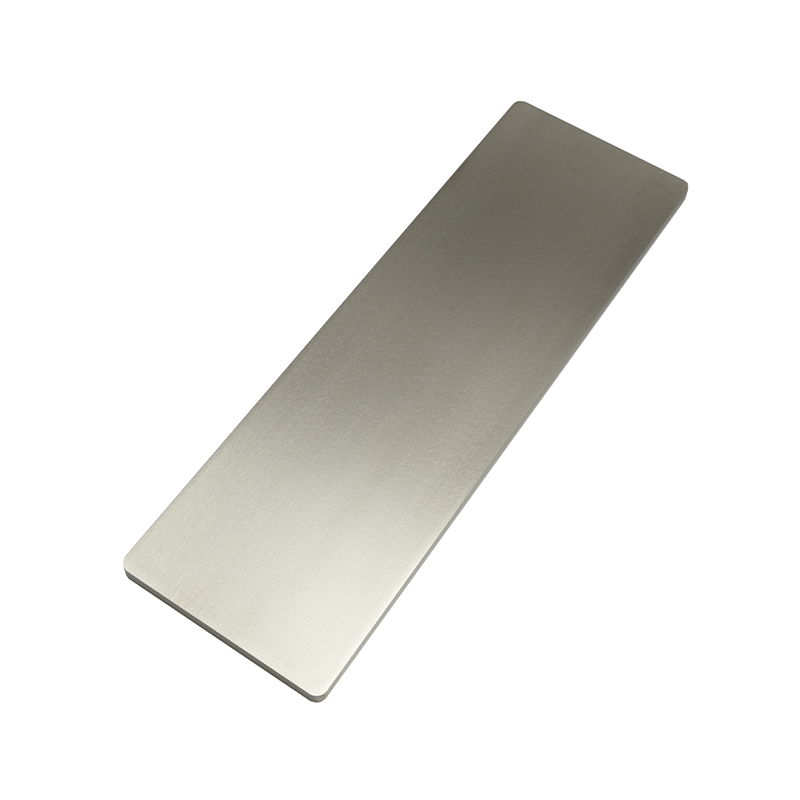
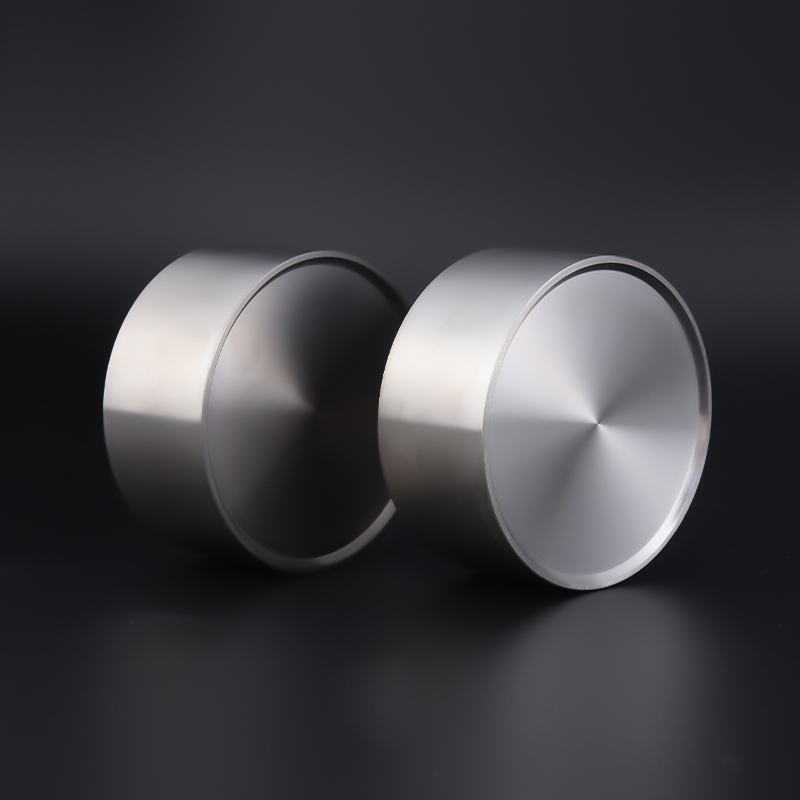
| Titanium sputtering targets | Thin-film coatings for semiconductors, optics, and decorative finishes |
| Titanium evaporation materials | Vacuum deposition processes for electronics and optical components |
| High purity titanium ingots | Research applications and specialty alloy production |
| Titanium-based superalloy materials | Aerospace turbine blades and high-stress structural parts |
As demand for advanced electronics and aerospace components continues to grow, the role of a reliable high purity Ti supplier has become increasingly important. Manufacturers in the semiconductor and advanced materials sectors typically look for an ultra high purity metals manufacturer capable of consistently delivering 5N, 6N, and even 7N purity grades, along with strict quality documentation and traceability for each batch.
Key Takeaways on Titanium's Discovery and Its Legacy
Titanium's journey from a curious black sand sample in Cornwall to one of the most valuable metals in modern manufacturing spans more than two centuries. The 1791 discovery by William Gregor, the formal naming by Klaproth in 1795, and the eventual industrial-scale production enabled by the Kroll process in the 1940s together laid the foundation for today's high purity materials industry. For companies working in semiconductor manufacturing, aerospace, and advanced materials research, this history is not just academic background — it explains why purity control, refining technology, and supplier expertise remain central to how titanium is sourced and used today.