English
What Really Separates 4N, 5N, and 6N Nickel Purity Grades?
Content
- 1 How the N-Grade Notation Translates Into Real Numbers
- 2 Why Purity Differences Actually Matter for Performance
- 3 Which Applications Call for 4N, 5N, or 6N
- 4 How Purity Grades Are Actually Verified
- 5 From 4N to 6N: What Changes in Production Difficulty and Cost
- 6 What to Check Before Sourcing High Purity Nickel
4N nickel is 99.99% pure, 5N is 99.999% pure, and 6N is 99.9999% pure. The real difference between them is not the small change in the percentage figure but the order-of-magnitude drop in total impurity content at each step: 4N nickel carries roughly 100 ppm of impurities, 5N drops that to around 10 ppm, and 6N pushes it down further to below 1 ppm. Each additional "N" represents a tenfold reduction in contamination, and that reduction is what determines whether a nickel material can meet the electrical, thermal, and magnetic performance demands of semiconductor, evaporation, and sputtering target applications.
How the N-Grade Notation Translates Into Real Numbers
The letter "N" stands for "Nine," referring to how many times the digit 9 repeats in the purity percentage. This is the standard shorthand used across the high purity materials industry. 4N corresponds to 99.99% purity with 0.01% impurities, 5N corresponds to 99.999% with 0.001% impurities, and 6N corresponds to 99.9999% with only 0.0001% impurities remaining. The percentage gap looks tiny on paper, but the underlying impurity reduction is substantial.
| Purity Grade | Purity Percentage | Approx. Impurity Level | Typical Use Case |
| 4N | 99.99% | ~100 ppm | General plating, alloy additives |
| 5N | 99.999% | ~10 ppm | Conductive parts, heat sinks, evaporation materials |
| 6N | 99.9999% | ~1 ppm | Semiconductor sputtering targets, precision electronics |
Each step up the N-scale demands roughly a ninety percent cut in remaining impurities. Going from 4N to 5N means stripping out nearly all of the contamination still present at the lower grade; going from 5N to 6N means repeating that same magnitude of reduction on a base that is already extremely clean. That is why each grade jump requires progressively more advanced refining and tighter process control rather than a simple repeat pass through the same purification step.
Why Purity Differences Actually Matter for Performance
Nickel is valued for its electrical conductivity, thermal conductivity, and antimagnetic behavior, but all three properties depend heavily on how clean and uniform the crystal lattice is. Impurity atoms such as sulfur, phosphorus, carbon, or oxygen lodge themselves inside the lattice and disrupt the free movement of electrons, which lowers conductivity. The same impurities act as scattering centers that reduce thermal transport efficiency.
In magnetism-sensitive electronic devices, residual impurities can also introduce unwanted magnetic interference that compromises the antimagnetic shielding nickel is meant to provide. For applications with strict electrical, thermal, or magnetic tolerances, moving up a purity grade is not a marginal upgrade — it is often the threshold that decides whether the material is usable at all.
Which Applications Call for 4N, 5N, or 6N
Different purity grades serve distinct roles across the supply chain, and matching the right grade to the right application avoids both performance shortfalls and unnecessary cost.
| Application | Recommended Grade | Why This Grade Fits |
| Alloy additives, general plating | 4N | Moderate purity requirement, cost-driven selection |
| Conductive components, electrodes, heat sinks | 5N | Lower impurity levels needed to preserve conductivity |
| Evaporation materials | 5N or higher | Coating uniformity depends on source material cleanliness |
| Semiconductor sputtering targets | 6N | Trace impurities can directly affect chip yield |
| Superalloy materials formulation | 5N–6N | High-temperature stability and corrosion resistance demands |
In semiconductor manufacturing, even trace-level impurities in a sputtering target can introduce defect sites during deposition that affect wafer yield. This is the reason most semiconductor grade metals suppliers position 5N, 6N, and even 7N grades as their core product lines — in this space, every additional grade of purity can translate into a measurable difference in finished device performance.
How Purity Grades Are Actually Verified
Purity claims in the high purity metals industry are not based on estimation; they rely on quantitative testing equipment. Glow discharge mass spectrometry (GDMS) and atomic emission spectroscopy systems such as LECO are commonly used because they can detect impurities down to roughly 0.01 ppm, giving reliable data to back up 4N, 5N, and 6N classifications.
For buyers sourcing high purity materials, requesting a GDMS test report — whether from an independent lab or the supplier's internal testing — is one of the most effective ways to confirm that a material truly meets its stated purity grade rather than relying on a label alone.
From 4N to 6N: What Changes in Production Difficulty and Cost
Climbing the purity ladder is not a matter of running the same filtration step twice. It typically involves layered improvements across raw material screening, melting method, vacuum processing, electrolytic refining, and sometimes zone refining. As an ultra high purity metals manufacturer pushes from 5N toward 6N, the process usually requires vacuum electron beam melting or multi-stage purification combined with stricter full-process quality control.
This complexity shows up directly in cost: production expense per unit weight tends to rise non-linearly as purity climbs. For this reason, selecting the grade that just meets the application's actual requirement — rather than defaulting to the highest available grade — is usually the more cost-effective sourcing strategy.
What to Check Before Sourcing High Purity Nickel
Beyond the purity number itself, a few additional factors determine whether a supplier of high purity materials can reliably deliver material that performs as specified.
| Factor | Why It Matters |
| Testing capability | Access to GDMS or equivalent equipment and willingness to share full test reports |
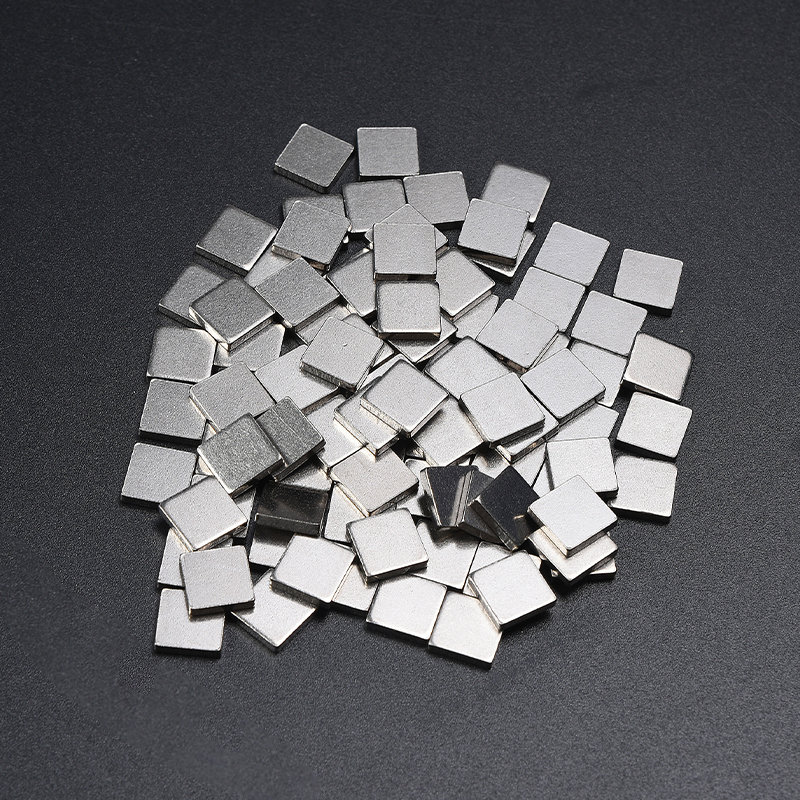
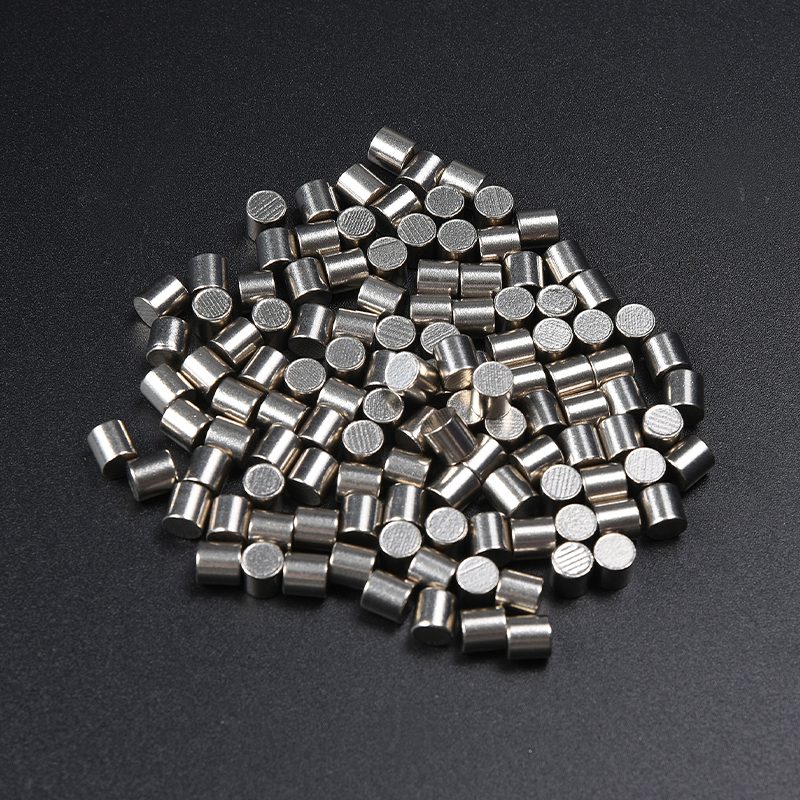
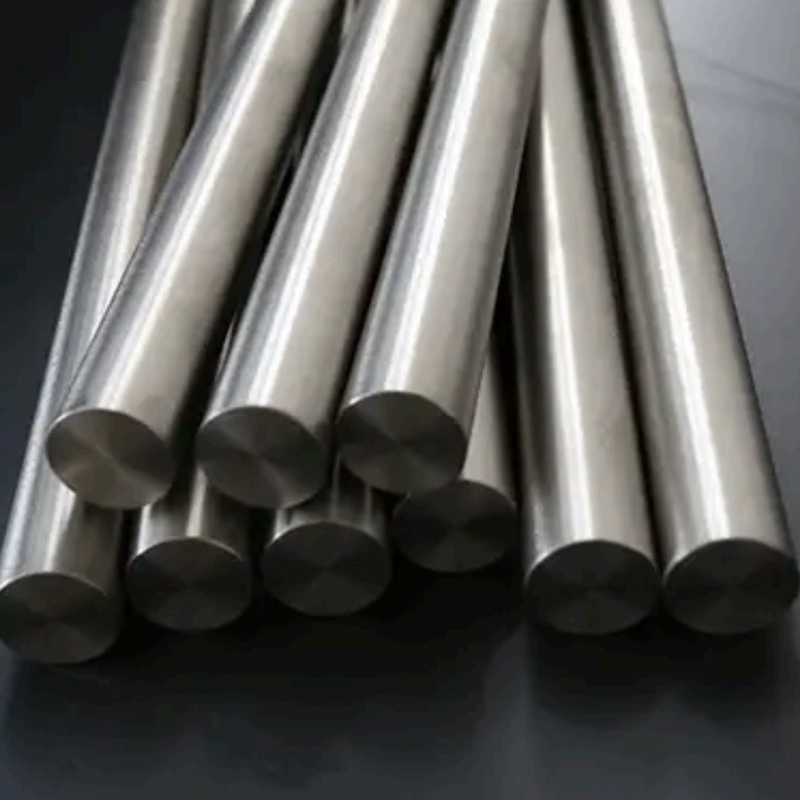
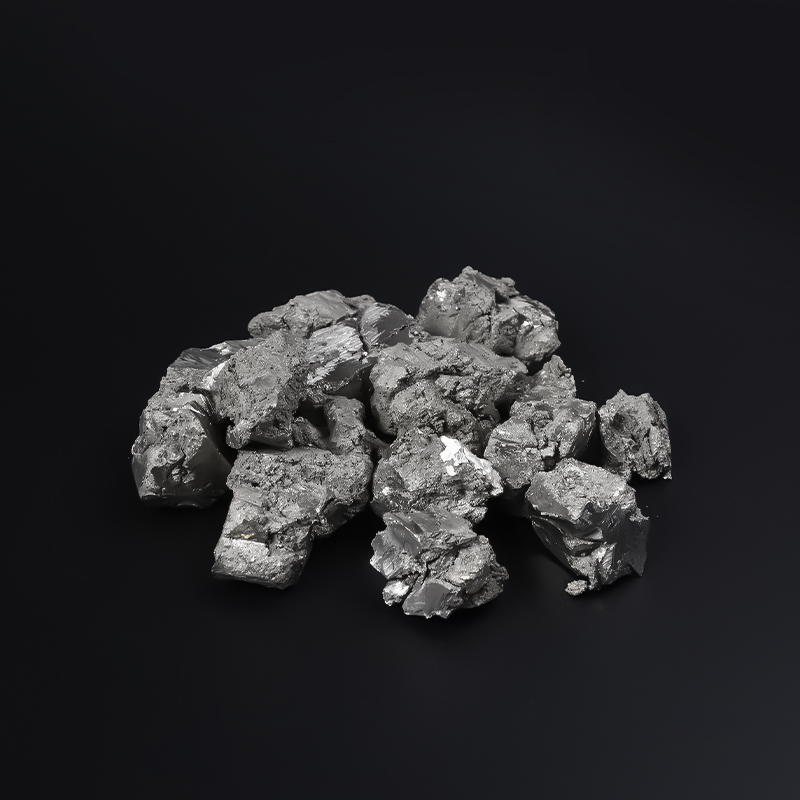
| Customization options | Ability to supply custom sizes, weights, and forms such as block, ingot, or particle |
| Packaging and handling | High purity metals are sensitive to oxidation and contamination, requiring inert gas or vacuum sealing |
| Track record | Demonstrated supply history in semiconductor, aerospace, or similarly demanding sectors |
In practice, 4N, 5N, and 6N nickel are not simply ranked from "good enough" to "best." Each grade is matched to a specific electrical, thermal, or magnetic performance threshold, balanced against budget. Understanding the data and process logic behind each grade makes it far easier for procurement teams and engineers to select the right material rather than overpaying for purity the application does not need.