English
What is the difference between titanium metal and titanium dioxide?
Content
- 1 Titanium Metal vs Titanium Dioxide: The Core Chemical Difference
- 2 Mechanical and Physical Behavior
- 3 How Titanium Metal Is Produced at High Purity
- 4 High Purity Titanium Product Range
- 5 Industrial Applications of Titanium Metal
- 6 Industrial Applications of Titanium Dioxide
- 7 Purity Grades That Matter for Semiconductor Use
- 8 Choosing Between Titanium Metal and Titanium Dioxide
Titanium metal and titanium dioxide are not the same material and cannot be substituted for one another. Titanium metal (Ti) is a pure metallic element valued for strength, low density and corrosion resistance, while titanium dioxide (TiO2) is a ceramic-like compound formed when titanium bonds with oxygen, primarily used as a white pigment, coating and semiconductor thin-film material. One is a structural and functional metal; the other is a chemical compound used mostly in powder or thin-film form.
Titanium Metal vs Titanium Dioxide: The Core Chemical Difference
Titanium metal exists in its elemental form, with atoms bonded together in a metallic lattice. It conducts electricity, can be machined, forged, rolled or melted, and reacts with oxygen only on its surface, forming a thin protective oxide layer. Titanium dioxide, by contrast, is a compound made of one titanium atom bonded to two oxygen atoms. It behaves as a ceramic: it does not conduct electricity, cannot be forged, and is typically supplied as a fine powder, sputtering target or coating precursor rather than a structural part.
| Feature | Titanium Metal (Ti) | Titanium Dioxide (TiO2) |
| Form | Metal element, silvery-grey | White compound, usually powder |
| Density | 4.51 g/cm3 | 3.9-4.2 g/cm3 (rutile) |
| Melting Point | 1668 degrees C | 1843 degrees C |
| Electrical Conductivity | Conductive metal | Insulator / semiconductor oxide |
| Typical Supplied Forms | Sponge, ingot, crystal, plate, tube, target | Pigment powder, thin-film coating, target |
| Main Role | Structural, mechanical, aerospace-grade | Optical, protective coating, pigment |
Mechanical and Physical Behavior
Titanium metal is chosen for load-bearing and high-stress applications because it combines a high strength-to-weight ratio with excellent fatigue resistance. High purity titanium in 5N (99.999%), 6N (99.9999%) and 7N (99.99999%) grades further improves ductility and reduces impurity-driven cracking, which matters in aerospace structures and precision machined parts. Titanium dioxide has no comparable mechanical role; it is brittle in bulk form and is engineered instead for optical scattering, chemical stability under UV exposure, and dielectric behavior in thin films.
How Titanium Metal Is Produced at High Purity
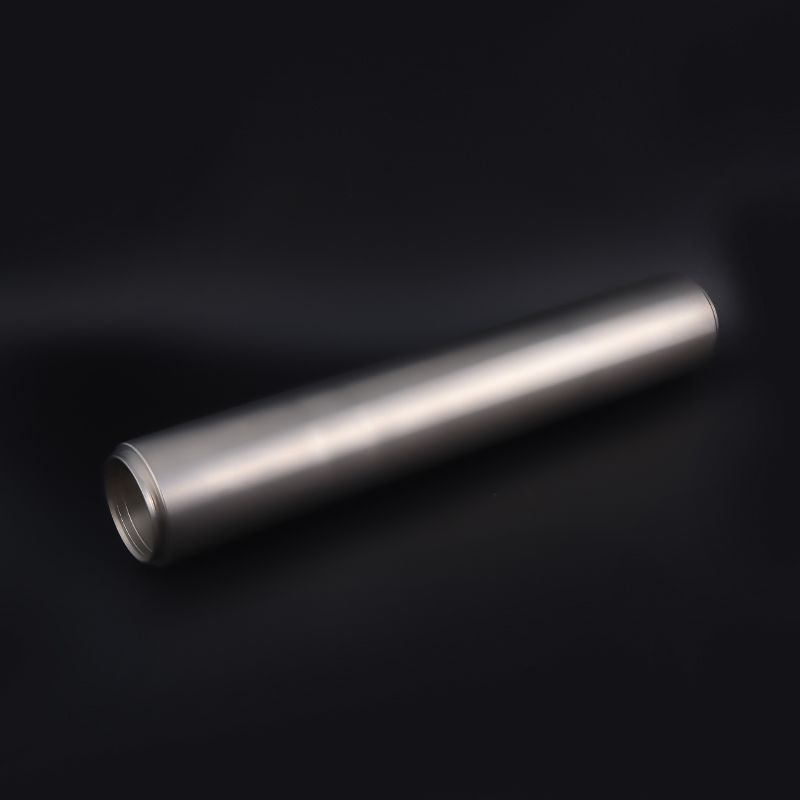
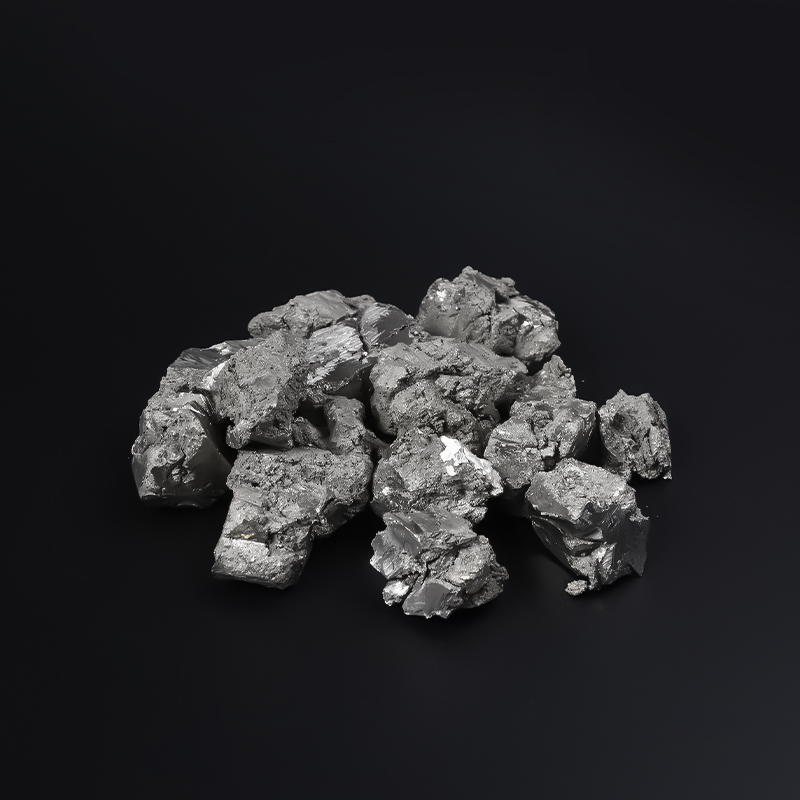
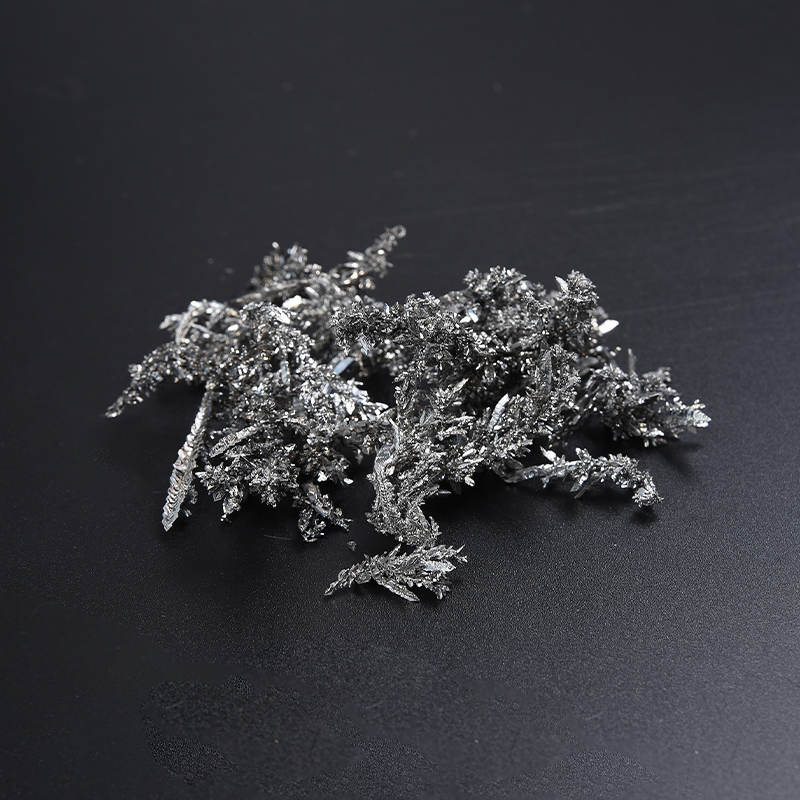
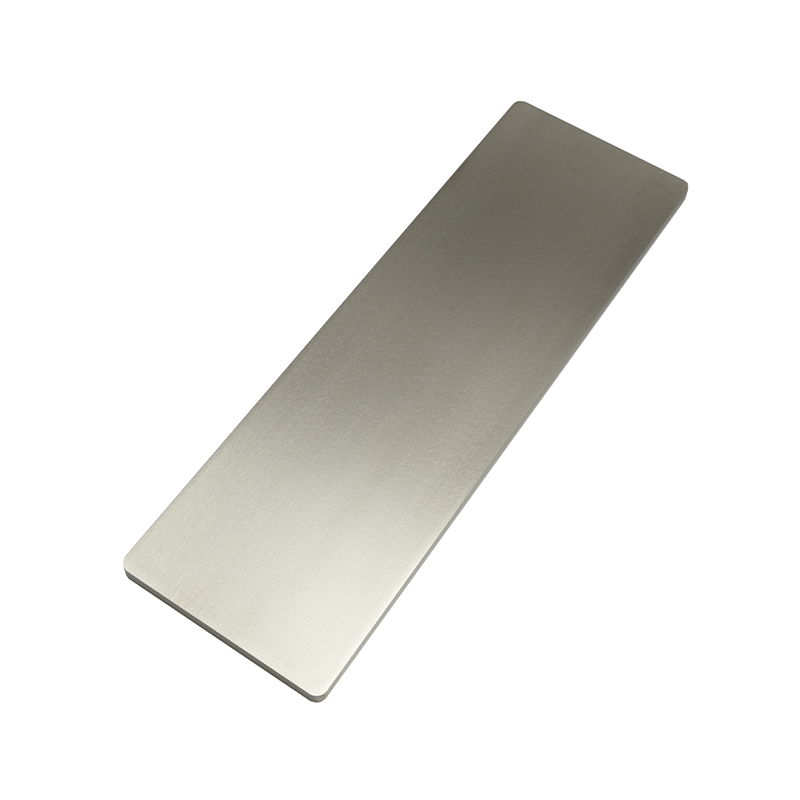
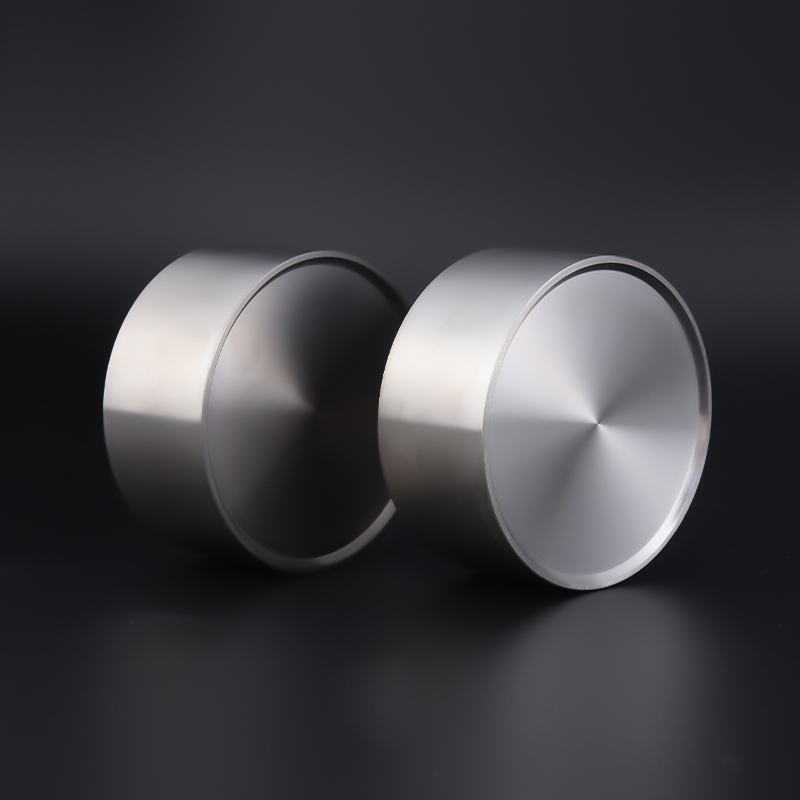
Commercial titanium metal generally starts as titanium sponge, produced through the Kroll process, then refined further for semiconductor and aerospace applications. A next-generation molten salt electrolytic purification process combined with vacuum electron beam melting allows large-scale production of 5N grade ultra-high purity titanium, a capability held by only a small number of manufacturers worldwide. This refined metal is then processed into crystal, ingot, plate, tube or sputtering target form depending on the end application. Titanium dioxide, in contrast, is produced through chloride or sulfate processes that oxidize titanium-bearing ore directly into the compound, without requiring metallic reduction.
High Purity Titanium Product Range
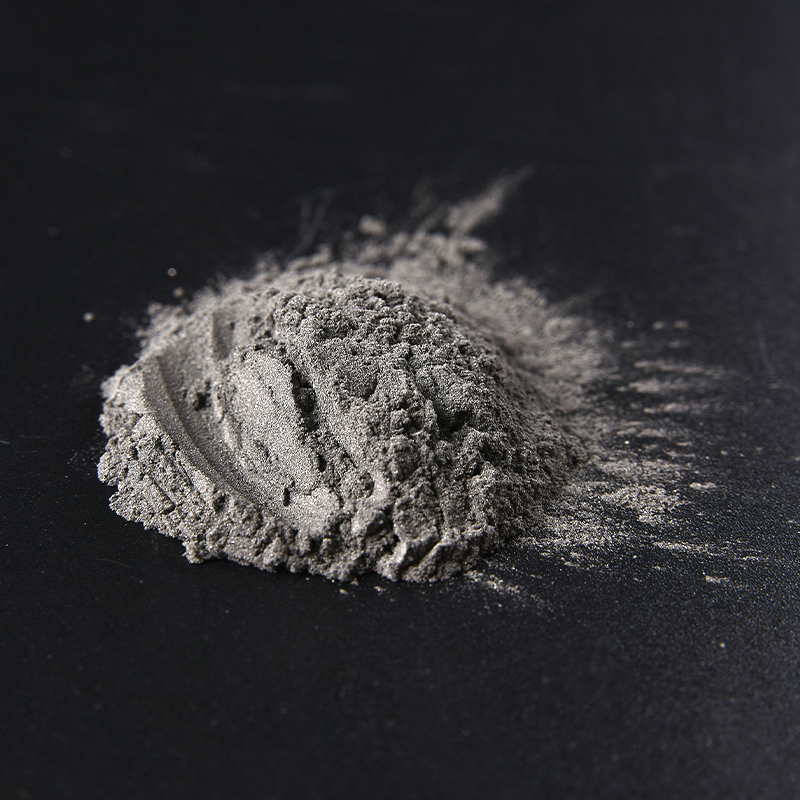
As a semiconductor grade metals supplier and evaporation materials manufacturer, our high purity Ti product line covers every stage from raw sponge to finished sputtering targets, supporting semiconductor, aerospace and superalloy materials production.
Industrial Applications of Titanium Metal
- Aircraft engine components and fuselage structures, where high strength and low density improve fuel efficiency
- Artificial joints and dental implants, relying on biocompatibility
- Reactors and piping in chemical processing, relying on corrosion resistance
- Semiconductor sputtering targets and evaporation materials used in chip manufacturing
- Superalloy materials for turbine and high-temperature components
Industrial Applications of Titanium Dioxide
- White pigment for paints, coatings, plastics and paper
- Anti-reflective and dielectric thin films in optics and electronics
- Photocatalytic coatings for self-cleaning and UV-resistant surfaces
- Sunscreen and cosmetic formulations, valued for UV scattering
Purity Grades That Matter for Semiconductor Use
For semiconductor and precision thin-film work, the purity of titanium metal directly affects film uniformity and device performance. As a supplier working with 5N, 6N and 7N grade high purity materials, purity level is typically matched to the sensitivity of the application rather than applied uniformly across all products.
| Grade | Purity | Typical Use |
| 5N | 99.999% | Sputtering targets, evaporation materials |
| 6N | 99.9999% | Advanced semiconductor thin films |
| 7N | 99.99999% | Research-grade and specialty applications |
Choosing Between Titanium Metal and Titanium Dioxide
The choice depends entirely on the function required. If the goal is strength, weight reduction, corrosion resistance or an electrically conductive thin film, titanium metal is the correct material, and purity level should be selected based on how sensitive the end application is to trace impurities. If the goal is a white pigment, protective coating or optical layer, titanium dioxide is the appropriate compound. Because both materials share the same base element but behave completely differently in production and performance, confirming purity grade, physical form and intended process before sourcing avoids costly substitution errors, particularly for semiconductor grade metals and superalloy materials where impurity tolerances are extremely tight.