English
Process for producing titanium compound structures via TiO containing intermediates
Content
- 1 Is Titanium an Element, Compound, or Mixture?
- 2 How Is Titanium Mined? From Ore to Raw Material
- 3 How Is Titanium Produced? The Standard Kroll Process
- 4 How Titanium Is Formed: The Role of TiO-Containing Intermediates
- 5 How Ultra-High Purity Titanium Is Manufactured (5N, 6N, 7N)
- 6 How Is Titanium Manufactured Into Usable Products?
- 7 Does Titanium Rust? Understanding Its Corrosion Resistance
- 8 Key Applications of Ultra-High Purity Titanium
- 9 Frequently Asked Questions About Titanium Production
- 9.1 How long does it take to produce titanium from ore to finished metal?
- 9.2 Why is titanium so expensive compared to steel or aluminum?
- 9.3 Can titanium be recycled?
- 9.4 What is the difference between a titanium sponge and a titanium ingot?
- 9.5 Will titanium rust in saltwater or humid conditions?
- 9.6 What makes 5N ultra-high purity titanium different from standard-grade?
Titanium is a naturally occurring chemical element (atomic number 22) — not a compound or mixture — extracted primarily from mineral ores such as ilmenite and rutile through multi-stage refining processes. Commercially, titanium metal is produced via the Kroll Process, which converts titanium dioxide (TiO₂) into titanium tetrachloride (TiCl₄) and then reduces it to sponge titanium using magnesium. Ultra-high purity titanium (5N / 99.999% and above) requires additional advanced techniques such as molten salt electrolytic purification and vacuum electron beam melting. Titanium does not rust in the conventional sense — it forms a stable, self-healing oxide layer that provides outstanding corrosion resistance.
Is Titanium an Element, Compound, or Mixture?
Titanium (Ti) is a pure chemical element, not a compound or mixture. It sits at position 22 on the periodic table with an atomic weight of approximately 47.87 g/mol. In its metallic form, it consists entirely of titanium atoms arranged in a hexagonal close-packed (HCP) crystal structure at room temperature. When alloyed with other elements — for example, Ti-6Al-4V (6% aluminum, 4% vanadium) — it becomes an alloy, which is technically a mixture of metals. Pure titanium itself, however, is a single-element substance classified as a transition metal.
- Density: 4.51 g/cm³ (about 60% the density of steel)
- Melting point: 1,668 °C (3,034 °F)
- Tensile strength (pure): up to 740 MPa
- Abundance in Earth's crust: approximately 0.66% by weight — the 9th most abundant element
How Is Titanium Mined? From Ore to Raw Material
Titanium does not occur as a free metal in nature. It is mined from two primary ore minerals:
- Ilmenite (FeTiO₃): The most abundant titanium mineral, typically containing 45–65% TiO₂. Major deposits exist in Australia, South Africa, Canada, Norway, and China.
- Rutile (TiO₂): A higher-grade ore with 90–98% TiO₂ content, primarily found in beach sand deposits in Australia and Sierra Leone.
Mining typically uses open-cast (surface) mining or dredging of mineral sands. The ore is then concentrated using gravity separation, magnetic separation, and electrostatic techniques. The resulting concentrate (called "titanium slag" or "synthetic rutile") feeds into downstream smelting and chemical processes. Australia accounts for roughly 20% of global ilmenite production, while China dominates global titanium sponge output at over 60% of world's supply.
How Is Titanium Produced? The Standard Kroll Process
The dominant commercial method for producing titanium metal is the Kroll Process, invented by Wilhelm Kroll in 1940. It converts TiO₂ into metallic titanium through a series of controlled chemical reactions. Below is an overview of the key stages:
| Stage | Process | Key Intermediate / Output | Temperature |
|---|---|---|---|
| 1. Chlorination | TiO₂ + 2Cl₂ + C → TiCl₄ + CO₂ | Titanium tetrachloride (TiCl₄) | 800–1,000 °C |
| 2. Purification | Distillation to remove impurities (FeCl₃, VOCl₃) | High-purity TiCl₄ | ~136 °C (boiling point) |
| 3. Magnesium Reduction | TiCl₄ + 2Mg → Ti + 2MgCl₂ | Titanium sponge (~99.5–99.9% Ti) | 800–850 °C (inert atmosphere) |
| 4. Vacuum Distillation | Remove residual MgCl₂ and Mg | Purified Ti sponge | 900–1,000 °C (vacuum) |
| 5. Melting & Casting | Vacuum arc remelting (VAR) or electron beam melting | Ti ingots/billets | >1,668 °C (vacuum) |
The Kroll Process is an energy-intensive batch process — producing one metric ton of titanium sponge consumes approximately 20–30 MWh of electricity. This is a key reason titanium costs significantly more than steel for industrial applications.
How Titanium Is Formed: The Role of TiO-Containing Intermediates
During chlorination, titanium dioxide (TiO₂) reacts with chlorine gas in the presence of carbon (coke) to form titanium tetrachloride (TiCl₄), the central intermediate in virtually all titanium metal production. TiCl₄ is a colorless, volatile liquid at room temperature (boiling point 136.4 °C), which makes it highly amenable to distillation-based purification.
In research and advanced production settings, lower-valence TiO-containing compounds — such as titanium monoxide (TiO) and titanium sesquioxide (Ti₂O₃) — appear as intermediate phases during carbothermic reduction or electrolytic processes. These sub-oxides are typically found within the TiO₂–Ti system during high-temperature reduction and play a role in novel direct electrolysis methods (such as the FFC Cambridge Process) that seek to replace or supplement the Kroll Process:
- FFC Cambridge Process: Electrolyses solid TiO₂ directly in molten CaCl₂ at ~900 °C; oxygen is ionized and migrates to the anode, leaving metallic Ti. Sub-oxide phases (TiO, Ti₂O₃, Ti₃O₅) form transiently as the reduction proceeds.
- Molten Salt Electrolytic Purification: Used for ultra-high purity applications; dissolved titanium compounds are electrodeposited to achieve purity levels above 99.999% (5N).
Controlling the TiO-intermediate pathway is critical: incomplete reduction leaves oxygen-rich phases that embrittle the final metal, making precise process control essential for high-performance and high-purity grades.
How Ultra-High Purity Titanium Is Manufactured (5N, 6N, 7N)
Standard commercial-grade titanium sponge typically reaches 99.5–99.9% (3N–4N) purity. For the most demanding applications in semiconductors, quantum computing, and thin-film deposition, purity levels of 5N (99.999%), 6N (99.9999%), and 7N (99.99999%) are required. Achieving these grades demands additional purification stages beyond the Kroll Process.

Key Technologies for Ultra-High Purity Ti Production
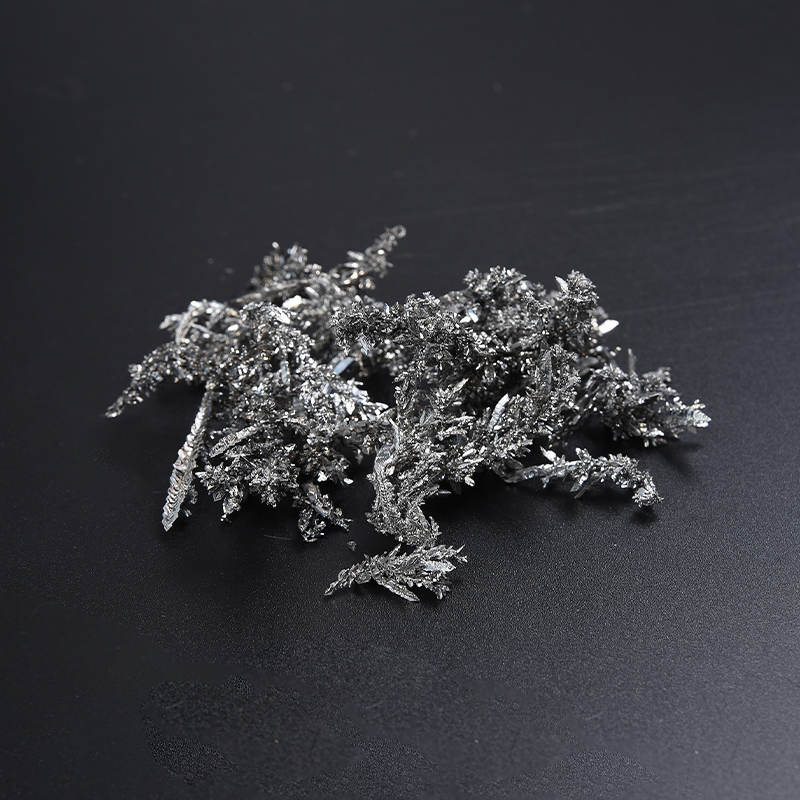
- Molten Salt Electrolytic Purification: Titanium is dissolved anodically in a molten salt bath (e.g., LiCl-KCl or NaCl-KCl) and electrodeposited cathodically with significantly reduced impurity content. This method selectively removes iron, nickel, silicon, and other tramp elements to below 1 ppm.
- Vacuum Electron Beam Melting (VEBM): The titanium feedstock is melted under high vacuum (<10⁻⁴ Pa) using a focused electron beam. Volatile impurities (Mn, Mg, Zn, Na, K) are evaporated; multiple passes further reduce impurity concentration. Typical impurity levels in 5N product: Fe < 5 ppm, O < 10 ppm, N < 5 ppm.
- Zone Refining: A narrow molten zone is passed along a titanium rod; impurities migrate toward one end due to segregation coefficients, achieving extreme purity in the purified portion.
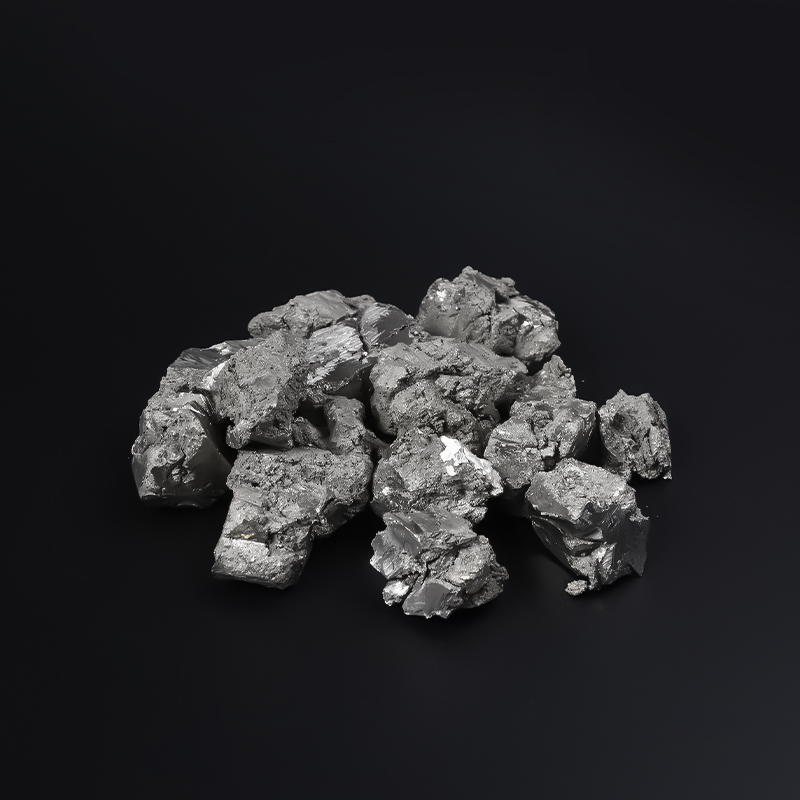
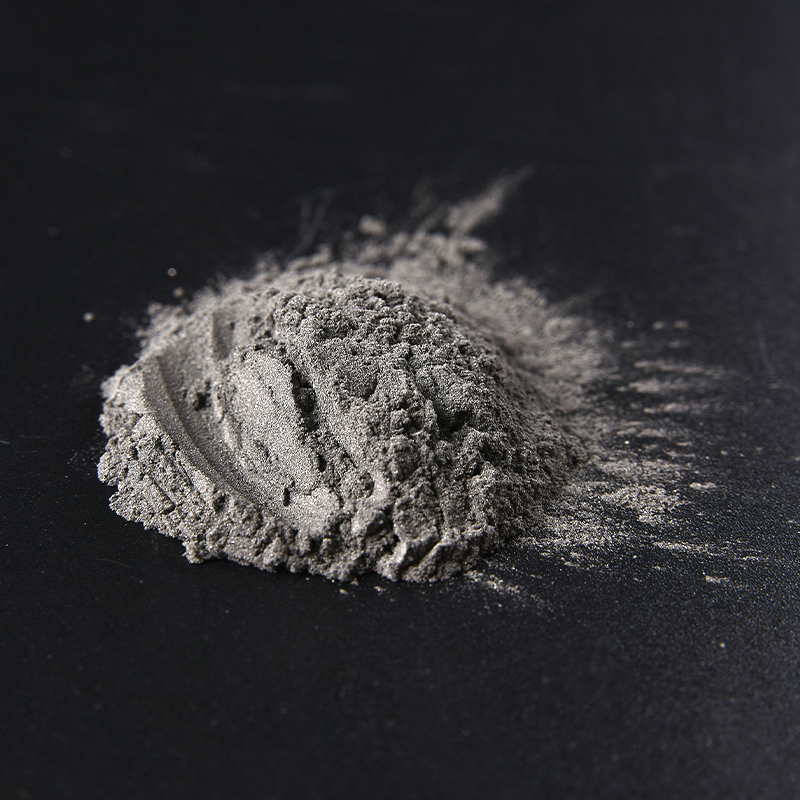
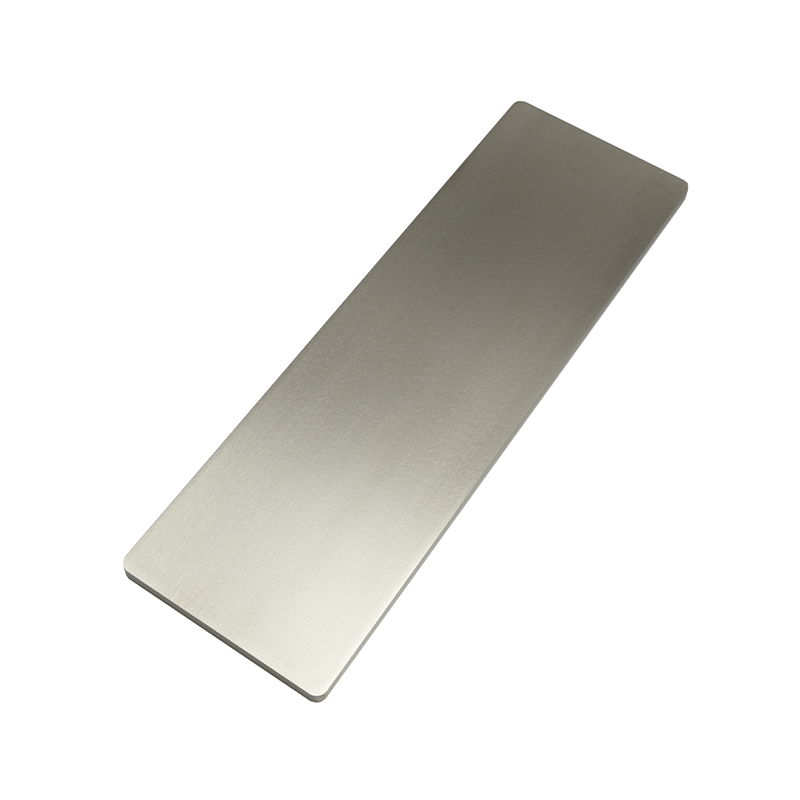
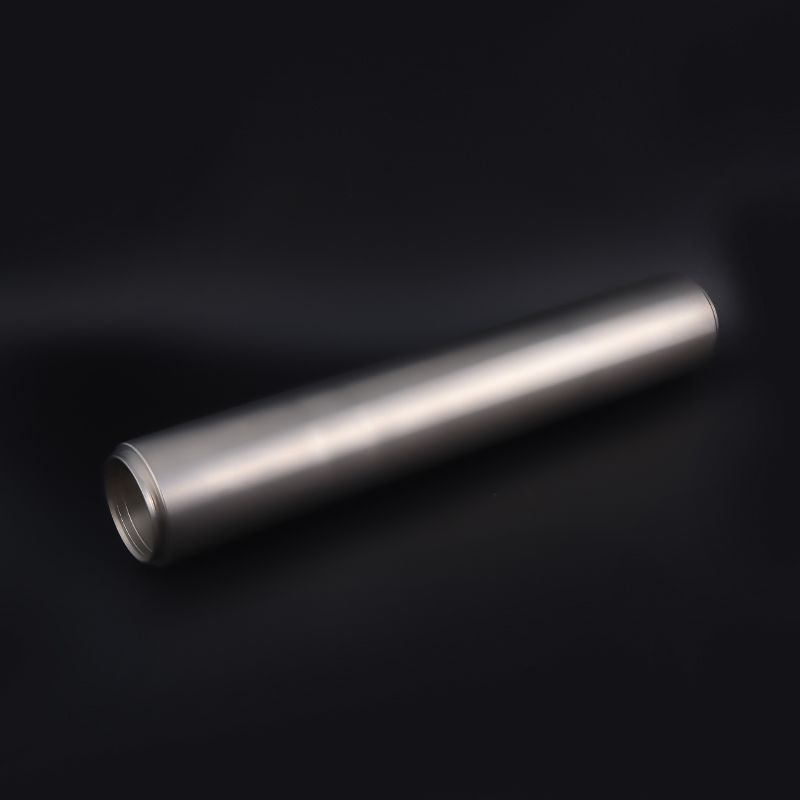
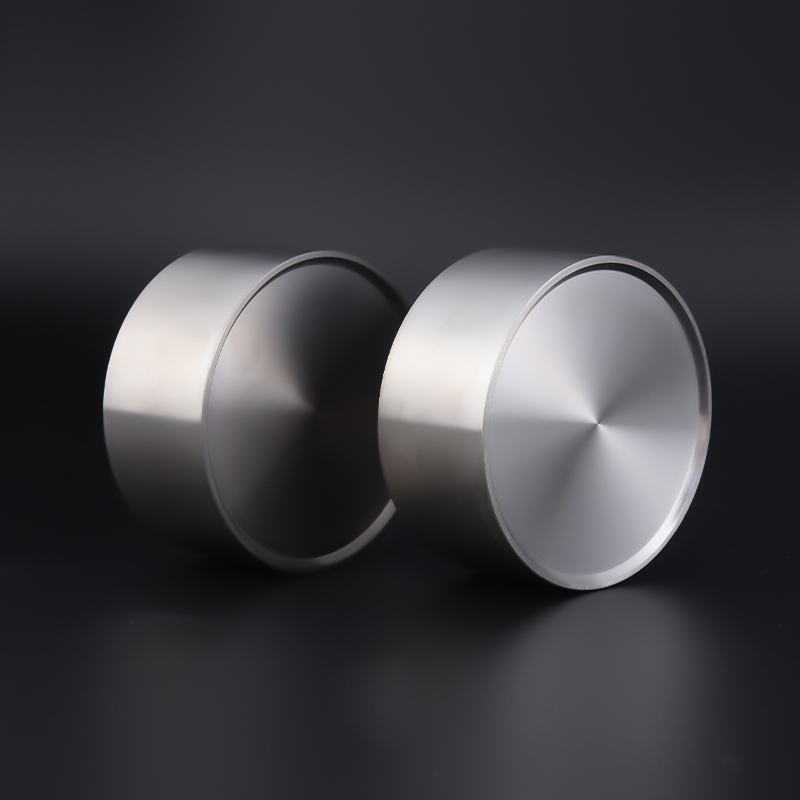
CRNMC has developed a next-generation molten salt electrolytic purification process combined with vacuum electron beam melting, enabling large-scale mass production of 5N (99.999%) grade ultra-high purity titanium. CRNMC is one of only four companies internationally capable of industrially producing ultra-high purity titanium at this scale. Custom 6N and 7N alloys are also available, with dimensions and weights tailored to customer specifications.
| Grade | Purity (%) | Total Metallic Impurities | Typical Application |
|---|---|---|---|
| Commercial (3N–4N) | 99.5–99.99% | 100–5,000 ppm | Aerospace structures, chemical equipment |
| 5N | 99.999% | < 10 ppm | Semiconductor sputtering targets, research |
| 6N | 99.9999% | < 1 ppm | Advanced electronics, thin-film PVD |
| 7N | 99.99999% | < 0.1 ppm | Quantum devices, cutting-edge R&D |
How Is Titanium Manufactured Into Usable Products?
Once a titanium sponge or ingot is produced, it undergoes further processing to become components and semi-finished products. The manufacturing chain includes:
- Blending and compaction: Sponge is blended with alloying elements (if needed) and compressed into electrode compacts.
- Vacuum Arc Remelting (VAR): Electrodes are melted 2–3 times in a vacuum furnace to achieve chemical homogeneity. Ingots typically weigh 3–10 metric tons.
- Hot working: Ingots are forged and rolled at 800–1,100 °C to produce billets, bars, plates, and sheets. Titanium's high reactivity requires a controlled atmosphere or coatings to prevent oxidation.
- Cold working and machining: Final dimensions are achieved through cold rolling, drawing, or CNC machining. Titanium's springback and work-hardening require specialized tooling.
- Heat treatment: Annealing at 700–850 °C relieves internal stress and restores ductility.
- Surface finishing: Pickling, anodizing, or coating improves surface quality and performance for specific applications.
Does Titanium Rust? Understanding Its Corrosion Resistance
Titanium does not rust. Rust is iron oxide (Fe₂O₃), which forms when iron or steel reacts with oxygen and water. Since titanium contains no iron, it cannot rust in this sense. Instead, titanium reacts instantly with atmospheric oxygen to form a dense, tightly adherent layer of titanium dioxide (TiO₂) just 2–7 nanometers thick. This passive oxide layer:
- Is self-healing — if scratched or abraded, it reforms within milliseconds in air or water
- Resists attack by most acids, including nitric acid, citric acid, and dilute sulfuric acid
- Provides excellent resistance to seawater and chloride environments (unlike stainless steel, which can suffer pitting corrosion in high-chloride conditions)
- Maintains stability at temperatures up to ~600 °C in air
The only environments that can attack titanium are concentrated hydrofluoric acid (HF), hot concentrated sulfuric acid, and strongly reducing media without oxygen. For virtually all commercial and industrial environments, titanium's corrosion performance is exceptional — making it the material of choice for chemical reactors, marine hardware, and medical implants.
Key Applications of Ultra-High Purity Titanium
The exceptional combination of high purity, mechanical strength, corrosion resistance, and biocompatibility makes titanium — especially at 5N and above — indispensable across multiple high-technology sectors:

Aerospace
Titanium alloys constitute 25–35% of the structural weight of modern commercial aircraft (e.g., Boeing 787 Dreamliner uses approximately 14% titanium by weight). Its high strength-to-density ratio reduces airframe weight, directly improving fuel efficiency. Engine compressor blades and fan disks exploit their strength retention at elevated temperatures.
Medical Devices
Titanium's biocompatibility makes it the preferred material for orthopedic implants, dental implants, and surgical instruments. The global orthopedic implants market exceeded $52 billion in 2023, with titanium holding the largest material share. Unlike stainless steel, titanium does not trigger an immune response and osseointegrates naturally with bone tissue.
Semiconductor & Electronics
In chip manufacturing, ultra-high purity titanium sputtering targets (5N and 6N grade) are used in physical vapor deposition (PVD) to deposit titanium nitride (TiN) barrier layers and titanium adhesion layers on integrated circuits. Impurities in sputtering targets directly degrade device yield and reliability, making purity critical.
Chemical Processing Equipment
Titanium reactors, heat exchangers, and piping systems are widely used in chlor-alkali plants, pharmaceutical manufacturing, and seawater desalination. Titanium grade 2 withstands concentrated nitric acid (up to 100%) and wet chlorine environments where steel would fail within weeks.
Frequently Asked Questions About Titanium Production
How long does it take to produce titanium from ore to finished metal?
The full cycle from ore mining to titanium sponge typically takes several weeks. A single Kroll Process batch (producing 3–10 tons of sponge) takes approximately 5–7 days for the reduction step alone, plus additional time for vacuum distillation, VAR melting, and hot working. Ultra-high purity production involving electrolytic purification and multiple electron beam melt passes can take several additional weeks.
Why is titanium so expensive compared to steel or aluminum?
Titanium's high cost stems from: (1) the energy-intensive Kroll Process (~20–30 MWh/ton), (2) the need for inert or vacuum processing environments to prevent contamination, (3) difficult machining characteristics that shorten tool life, and (4) relatively low production volumes. Titanium sponge costs approximately $8–15/kg, compared to $0.5–1/kg for steel and $2–3/kg for aluminum.
Can titanium be recycled?
Yes. Titanium scrap (turnings, chips, and off-cut ingot material) can be recycled by remelting via VAR or electron beam processes. Recycled titanium can represent 15–30% of feedstock in some production facilities. Maintaining traceability and preventing cross-contamination with other alloys is critical during recycling.
What is the difference between a titanium sponge and a titanium ingot?
Titanium sponge is the porous, irregular metallic titanium produced directly from the Kroll Process — it has a sponge-like texture due to trapped chloride pockets. Titanium ingot is produced by consolidating and melting sponge (typically 2–3 times by VAR) to create a homogeneous, fully dense metal form suitable for rolling, forging, and machining.
Will titanium rust in saltwater or humid conditions?
No. Titanium is highly resistant to both saltwater and humid atmospheres. Its TiO₂ passive layer provides superior protection in marine environments. Titanium is routinely used in submarine components, offshore oil platforms, and coastal chemical plants — environments where carbon steel corrodes rapidly, and even stainless steel may suffer crevice corrosion.
What makes 5N ultra-high purity titanium different from standard-grade?
Standard commercial-grade titanium contains hundreds to thousands of ppm of metallic impurities (iron, silicon, nickel, etc.). At 5N purity, total metallic impurities are reduced to below 10 ppm. This level of purity is required for sputtering targets in semiconductor manufacturing, where trace impurities in deposited films can cause transistor failure, device leakage, or reliability degradation. It is also valued in research applications requiring reproducible material behavior.