English
What Is Driving the 2026 Tantalum Supply Crisis and How Should Industry Respond?
Content
- 1 Market Overview: Expansion Meets Supply-Demand Imbalance
- 2 Demand Side: AI and 5G Become Core Growth Engines
- 3 Supply Side: Resource Concentration Meets Geopolitical Risk
- 4 Price Trends: Record Surge in Q1 2026
- 5 Regional Landscape: China Leads Growth, U.S. Strengthens Autonomy
- 6 Industry Challenges: Substitute Materials and Recycling Bottlenecks
- 7 Strategic Recommendations: How Companies Should Respond to the New Tantalum Supply Landscape
The tantalum market in 2026 is at a critical inflection point where structural supply shortages collide with explosive demand growth. Fueled by AI data center construction, 5G equipment upgrades, and defense strategic stockpiling, global tantalum demand is significantly outpacing supply expansion capabilities. In Q1 2026, Chinese tantalum metal export prices surged 47.07% quarter-over-quarter, while the U.S. market jumped 32.51%, marking the most dramatic quarterly volatility in recent years. Meanwhile, global tantalum ore production remains heavily concentrated in the Democratic Republic of Congo (DRC) and Rwanda, with supply chain fragility once again exposed by landslides and political conflicts in early 2026. For electronics manufacturers, defense contractors, and medical implant enterprises, establishing diversified procurement channels and long-term fixed-price agreements has become the core strategy for mitigating supply disruption risks.
Market Overview: Expansion Meets Supply-Demand Imbalance
According to Future Market Insights, the global tantalum and niobium materials market reached $4.07 billion in 2025 and is projected to grow to $4.36 billion in 2026, surpassing $8.74 billion by 2036, representing a CAGR of 7.2% from 2026 to 2036. Tantalum materials account for 62.4% of market share, while electronics applications dominate downstream demand with 48.7%.
In physical volume terms, Mordor Intelligence estimates global tantalum consumption at approximately 3,000 tonnes in 2025, rising to 3,150 tonnes in 2026 and reaching 4,020 tonnes by 2031, with a CAGR of 4.99%. Notably, capacitor applications command 43.65% of revenue share and are projected to be the fastest-growing segment at a 6.37% CAGR.
| Metric | 2025 | 2026 (Est.) | 2036 (Proj.) | CAGR |
|---|---|---|---|---|
| Market Size (USD Billion) | 4.07 | 4.36 | 8.74 | 7.2% |
| Tantalum Share | — | 62.4% | — | — |
| Electronics Share | — | 48.7% | — | — |
| Global Consumption (Kilotonnes) | 3.0 | 3.15 | 4.02 | 4.99% |
Demand Side: AI and 5G Become Core Growth Engines
AI Data Centers Ignite Capacitor Demand
From 2025 to 2026, AI infrastructure construction has become the largest incremental source of tantalum demand. Industry analysis indicates that a single NVIDIA H100 AI accelerator board requires up to 25 tantalum polymer capacitors for power management and signal filtering. With Alphabet boosting 2026 capital expenditure to $175-185 billion, Meta planning $115-135 billion, and Amazon projecting up to $200 billion, global data center demand for high-performance capacitors is growing exponentially.
Market participants note: "Even if less than 1% of total AI spending flows into capacitors, the absolute amount far exceeds historical levels." This trend closely mirrors the dot-com era when data center construction drove tantalum prices to historic highs, but the current cycle features far greater capital scale and sustainability.
5G and Semiconductor Manufacturing Ramp Up
5G network densification and terminal device upgrades are driving procurement of miniaturized tantalum capacitors. Tantalum capacitors maintain stable capacitance across -55°C to +175°C, making them the preferred choice for telecom equipment manufacturers seeking to avoid field failures. Packaging technology is advancing toward the 0201 size node, with powder-engineered anodes achieving high CV (capacitance-voltage) ratios without sacrificing mechanical integrity.
Furthermore, demand for tantalum sputtering targets at advanced semiconductor nodes is rising. High-purity tantalum thin films serve as barrier layers in chip interconnects, with demand directly tied to fab expansion cycles. Mordor Intelligence analysis shows this factor contributes approximately +0.9% to global tantalum market CAGR, with a long-term impact horizon (4+ years).
Defense and Medical Provide Stable Foundation
In September 2025, the U.S. Defense Logistics Agency (DLA) awarded an $8.6 million delivery order to a Boyertown, Pennsylvania tantalum processor for supplying tantalum ingots to the National Defense Stockpile. The company also secured a 5-year contract worth up to $100 million to maintain domestic supply capability from ore processing for defense and aerospace applications. Tantalum's irreplaceability in high-temperature alloys and electronic components makes it a staple on national strategic reserve lists.
The medical sector remains equally robust. Tantalum's excellent biocompatibility secures its position in heart stent and orthopedic implant manufacturing. Medical-grade tantalum coatings for neural implants are projected to contribute +0.4% to market CAGR, representing a long-term growth driver.
Supply Side: Resource Concentration Meets Geopolitical Risk
Global Mine Production Highly Concentrated
According to the U.S. Geological Survey (USGS) 2026 Mineral Commodity Summaries, global tantalum mine production in 2025 totaled approximately 2,500 tonnes, with the DRC leading at 1,300 tonnes (52% of global total); Rwanda produced 400 tonnes, Nigeria 390 tonnes, and Brazil 190 tonnes. China, a major consumer and processor, mined 80 tonnes in 2025 but holds approximately 240,000 tonnes in reserves.
| Country/Region | 2024 Production | 2025 Production | Reserves |
|---|---|---|---|
| DRC | 1,270 | 1,300 | N/A |
| Rwanda | 374 | 400 | N/A |
| Nigeria | 390 | 390 | N/A |
| Brazil | 112 | 190 | 40,000 |
| China | 76 | 80 | 240,000 |
| Australia | 52 | 50 | 120,000 |
| Global Total | 2,500 | 2,500 | — |
Conflict Minerals and Logistics Disruptions Amplify Supply Fragility
In early 2026, landslides and mine collapses at Rwanda's Rubaya mining site immediately tightened regional tantalum raw material supply. Since substantial volumes of minerals from rebel-controlled eastern DRC are smuggled through Rwanda, the incident rapidly rippled through global tantalum feedstock markets, triggering price spikes. Meanwhile, political tensions between the DRC and Rwanda have long plagued regional mineral trade, and despite a U.S.-brokered peace agreement signed in June 2025, implementation remains uncertain.
Conflict mineral compliance costs further raise supply chain barriers. The U.S. Dodd-Frank Act mandates corporate disclosure of tantalum and other conflict mineral sources, adding procurement complexity and compliance premiums. For downstream electronics and aerospace manufacturers, geopolitical risks from supply concentration have become a more severe challenge than price volatility itself.
Lithium Co-Production Offers Limited Relief
Hard-rock lithium mines in Australia and Zimbabwe co-produce tantalum concentrate during spodumene extraction, providing some buffer for supply diversification. Mordor Intelligence estimates this factor contributes approximately +0.6% to global tantalum market CAGR, with a medium-term impact horizon (2-4 years). However, co-production volumes are constrained by lithium price fluctuations, and grades and production scales remain insufficient to displace Africa's dominant position.
Price Trends: Record Surge in Q1 2026
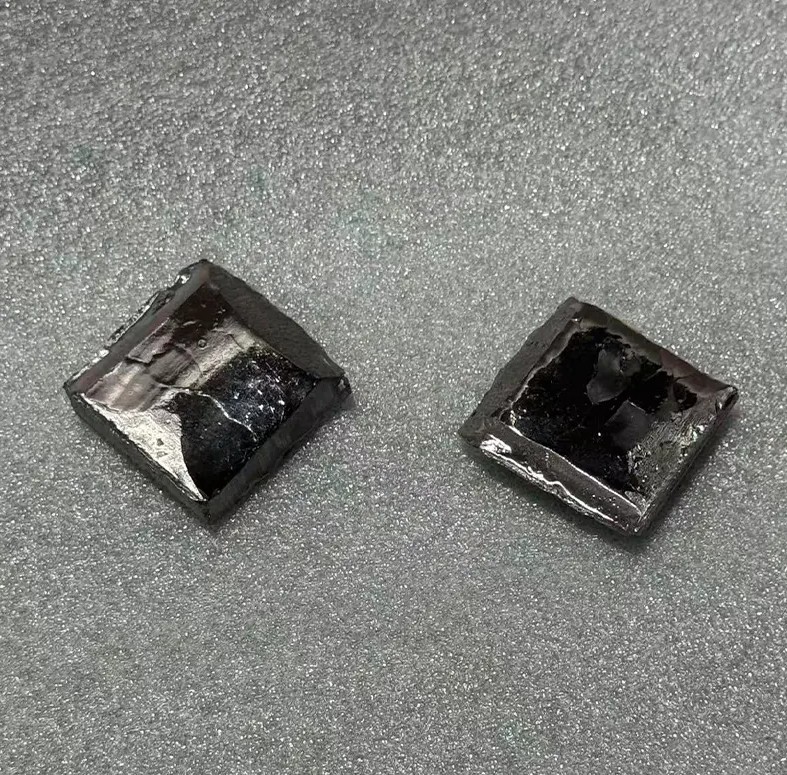
Q1 2026 witnessed the most dramatic price escalation cycle in recent years for the global tantalum market. Price-Watch data reveals:
- China Market: 99.95% purity tantalum metal export price (FOB Shanghai) rose 47.07% quarter-over-quarter from Q4 2025; March 2026 alone saw a surge of 42.00%.
- U.S. Market: 99.99% purity tantalum metal domestic transaction price (Delivered Baltimore) climbed 32.51% quarter-over-quarter from Q4 2025; March 2026 recorded a 38.16% monthly jump.
Core drivers behind the price explosion include: supply disruptions in African primary production regions, accelerated device production as global semiconductor supply chains normalized, and strategic stockpiling for defense procurement programs. The U.S. market's slightly lower increase partly reflects ongoing efforts to build non-Chinese, non-conflict mineral tantalum supply chains, though alternative capacity has yet to reach a scale sufficient to buffer global price shocks.
Capacitor manufacturers raised prices across multiple product lines in 2025, including tantalum polymer capacitors and multilayer ceramic capacitors (MLCC). While part of the increase stemmed from rising tantalum powder costs, AI demand growth was equally significant. A leading global tantalum polymer capacitor manufacturer achieved sales of $3.07 billion from January to September 2025 (up 8.5% year-over-year in USD terms), with the capacitor business accounting for approximately 23% of total sales, with growth "driven primarily by strong demand for AI and high-end application products."
Regional Landscape: China Leads Growth, U.S. Strengthens Autonomy
Asia-Pacific Commands Half the Market
In 2025, the Asia-Pacific region led global tantalum consumption with 46.50% market share, projected to grow at a 5.93% CAGR from 2026 to 2031. China, at 9.7% CAGR, is the fastest-growing market, followed by India at 9.0%. The region hosts the world's major electronics manufacturing and semiconductor fabs, with tantalum capacitor and sputtering target procurement rising in tandem with capacity expansion.
Europe and America Focus on Supply Security
Germany leads the European market with an 8.3% CAGR, benefiting from advanced materials applications and precision manufacturing demand. The U.S. posts a 6.8% CAGR, driven by the defense industrial base and commercial aerospace. But the core issue for the U.S. market has shifted from pure scale expansion to supply security—reducing dependence on African conflict minerals through defense stockpile procurement, domestic processing capacity building, and allied-source diversification.
Brazil stands out in Latin America with a 7.6% CAGR, its 40,000-tonne tantalum reserves and 190-tonne annual production making it the most promising supply source outside Africa. Resource development in Canada and Australia is also progressing, though unlikely to reshape the global supply landscape in the near term.
Industry Challenges: Substitute Materials and Recycling Bottlenecks
Limited Substitution Effect from Niobium Capacitors
Niobium, tantalum's sister element, can substitute tantalum capacitors in certain low-voltage applications, with use cases already emerging in automotive advanced driver-assistance systems (ADAS). However, niobium capacitors' voltage coverage falls far below tantalum's, unable to meet high-voltage safety-critical system requirements. Mordor Intelligence notes that niobium substitution exerts a -0.3% drag on tantalum market CAGR, remaining within a manageable range.
Recycling Systems Remain Immature
Tantalum recycling focuses primarily on capacitor extraction from electronic waste, but recovery rates are limited by dispersed waste streams, complex disassembly processes, and economic viability. Companies like Global Advanced Metals have established recycling programs, yet recycled volumes still account for less than 10% of total global supply. Against constrained primary mineral supply, improving recycling utilization rates will become a critical pathway for alleviating supply pressure in the medium to long term.
Technical Barriers Raise Industry Thresholds
Tantalum extraction and processing require specialized equipment, environmental compliance facilities, and strict safety protocols—not all production facilities possess these capabilities. The limited availability of high-grade ore reserves further constrains large-scale capacity expansion. The global tantalum and niobium materials market is dominated by 15 to 18 producers, with the top five accounting for approximately 58%-63% of market share, indicating high industry concentration.
Strategic Recommendations: How Companies Should Respond to the New Tantalum Supply Landscape
Facing the structural shortage in the 2026 tantalum market, downstream enterprises must build resilience across three dimensions: procurement strategy, technology substitution, and inventory management:
- Enter Long-Term Supply Agreements: During periods of volatile pricing, lock in 2-3 year contracts with conflict-mineral-certified suppliers to avoid spot market premiums. Aerospace and medical enterprises have widely adopted this strategy, prioritizing supply security over cost considerations.
- Advance Supplier Diversification: While maintaining procurement from African primary production regions, gradually increase supply ratios from Brazil, Australia, and recycling channels. The U.S. Defense Logistics Agency's domestic processing contract model offers a blueprint for cultivating non-traditional supply sources through policy incentives.
- Optimize Product Design to Reduce Unit Consumption: Without compromising performance, reduce tantalum capacitor usage per unit through circuit design optimization. MLCCs can assume filtering functions in certain frequency bands, though attention must be paid to their temperature stability and reliability differences.
- Build Strategic Inventory Buffers: For long-cycle projects such as AI servers and 5G base stations, reserve critical tantalum materials 6-12 months in advance. The Q1 2026 price surge has proven that enterprises lacking inventory buffers face dual pressure from supply disruptions and cost spikes.
- Invest in Recycling and Closed-Loop Supply Chains: Partner with specialized recyclers to extract tantalum from production scrap and retired electronic devices. While unlikely to displace primary minerals at scale in the short term, this provides enterprises with ESG compliance narratives and supply redundancy.
In summary, the 2026 tantalum market has shifted from cyclical volatility to structural tightness. The combined effect of AI, 5G, and defense demand, layered atop persistent fragility in African supply, means tantalum scarcity will become the norm over the next 5 to 10 years. For enterprises dependent on tantalum capacitors, high-temperature alloys, or medical implants, integrating tantalum into critical material risk management systems and proactively laying out diversified procurement channels is no longer optional—it is essential for survival.