English
Nb Material Guide: Properties, Applications & High-Purity Niobium Sourcing
Content
When an aerospace buyer receives an RFQ for "Nb material," the conversation rarely starts with the periodic table. It starts with grade, form, purity documentation, and delivery risk. Niobium — abbreviated Nb, atomic number 41, atomic weight 92.9 — is the refractory metal behind superconducting magnets, jet engine superalloys, and high-temperature vacuum equipment, and every downstream use case changes what the raw material has to look like.
This guide explains what Nb material is, how to choose the right form, and which checks separate a dependable high-purity niobium supply from a certificate-only promise.
What Is Nb Material?
Niobium is a transition metal in Group 5 of the periodic table, adjacent to tantalum, with which it shares excellent corrosion resistance and high-temperature stability. Older North American specifications still call it columbium (Cb), but the IUPAC name niobium and the symbol Nb are standard on international datasheets and certificates of analysis today.
The production route for engineering-grade niobium normally passes through pyrochlore concentrate, which becomes niobium oxide or ferroniobium for steelmaking. When the application demands high purity, the oxide is purified and reduced to metal, then consolidated by vacuum arc melting or electron-beam melting into ingots. Only after melting and processing does the material become plate, rod, tube, powder, or custom-machined shapes. That is why "Nb material" on a drawing can mean very different products depending on where in the chain the specification sits.
The Four Properties That Drive Material Selection
Four physical properties dominate practical decisions about niobium:
- Melting point — 2,468 °C (4,474 °F). Niobium maintains structural usefulness at temperatures that eliminate aluminum and most steels, which is why it appears in furnace elements and rocket components.
- Superconductivity. Pure niobium transitions to a superconducting state near 9.2 K, and its alloy with titanium (Nb-Ti) is the workhorse superconductor for MRI magnets and particle accelerators.
- Corrosion resistance. Niobium withstands most mineral acids at moderate temperatures and is frequently specified for chemical processing equipment where tantalum would be over-spec.
- Low neutron-capture cross-section. A decisive property for nuclear and fusion applications, where niobium does not easily absorb the neutrons that drive the reaction.
In engineering terms, these properties collectively mean one thing: when ordinary stainless steel or nickel alloys reach their limit, niobium is one of the few materials that keeps working. But the same logic does not apply to high-end uses — oxygen, nitrogen, carbon, and hydrogen degrade ductility and superconducting behavior at very low concentrations, so the certificate of analysis often matters more than the bar's dimensions.
Main Applications of Nb Material
Global consumption of niobium is dominated by steel, but the high-purity segment behaves quite differently from the ferroniobium market. The chart below shows the approximate end-use distribution:
Illustrative figures based on widely cited industry estimates.
Steel applications absorb roughly three-quarters of the niobium mined worldwide, and those buyers rarely care whether the material is 99% or 99.99% pure. Aerospace superalloys, superconducting wire, and electronic components, by contrast, are where purity and traceability become contractual obligations. Aircraft engine alloys rely on niobium for high-temperature strength; MRI and NMR magnets use Nb-Ti wire that starts from well-characterized high-purity feedstock; and niobium-based compounds appear in capacitors, lithium niobate optics, and specialized ceramic formulations.
For aerospace and vacuum furnace components, one of the most direct sourcing routes is high-purity feedstock that arrives ready for melting or alloying.
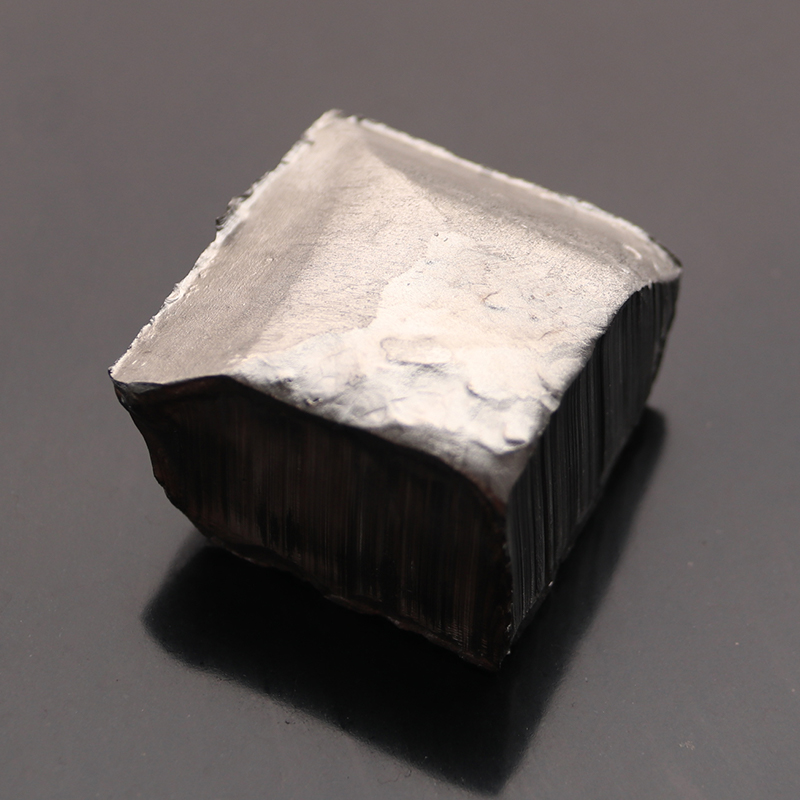 High-Purity Smelted Niobium for Aerospace Alloy ProductionThis 99.9% pure niobium, supplied in customizable ingots or pellets, is ideal for alloy smelting in aerospace and vacuum furnace components, offering batch traceability and industrial-grade packaging.View Product →
The aerospace and aviation industry overview on this site explains typical qualification routes for such materials.
Common Forms of Nb Material and How to Choose
Specification writers usually call out one of five forms:
| Form | Typical purity | Primary applications | Key ordering details |
|---|---|---|---|
| Niobium ingot | 3N – 4N | Vacuum remelting, alloying, forging, superconductor feedstock | Diameter, length, batch weight, certificate |
| Smelted niobium | 3N – 4N | Alloy additions, aerospace alloy melting | Surface condition, internal soundness |
| Plate / sheet | 3N – 4N | Chemical processing, corrosion-resistant linings | Thickness, flatness, surface finish |
| Powder | 2N5 – 3N | Capacitors, additive manufacturing | Particle size distribution, oxygen content |
| Rod / tube | 3N – 4N | Fasteners, furnace parts, medical devices | Temper, straightness, surface quality |
For most melt-and-form operations, the correct starting point is an ingot with documented composition and batch-level traceability.
 Ultra-High-Purity Niobium Ingot for Semiconductor and Alloy UseA 99.99% pure niobium ingot up to 400mm and 2 tons, with documented composition and protective export packaging, suits large-scale melting and semiconductor-grade applications.View Product →
The chart below shows, in relative terms, how industrial buyers typically split high-purity niobium purchases among the main material forms:
- Ingot / billet — 45%
- Plate / sheet — 25%
- Powder / granules — 20%
- Other forms — 10%
Illustrative distribution; the actual mix varies by end-user industry.
Purity Grades and How to Verify Them
Purity grades are expressed in "N" notation: 2N means 99%, 3N means 99.9%, 4N means 99.99%, and 5N means 99.999%. Most structural and corrosion applications run in the 3N band; superconducting cavities often require 4N or higher with additionally controlled interstitial content, frequently specified as a residual resistivity ratio (RRR) rather than a simple weight percentage.
Impurities that cause failures in high-purity niobium fall into two groups:
Metallic impurities
Tantalum, iron, nickel, and tungsten affect superconducting properties, thin-film behavior, and downstream fabrication. Tantalum matters most because it is chemically similar to niobium and difficult to separate.
Interstitial impurities
Oxygen, nitrogen, carbon, and hydrogen, even at tens of parts per million, raise hardness, reduce ductility, and degrade the superconducting residual resistivity ratio. They must be measured by combustion or inert-gas fusion analysis, not by a standard metal assay.
Before accepting a shipment, request:
- A certificate of analysis with the full metallic impurity list, measured by glow discharge mass spectrometry (GDMS) or inductively coupled plasma mass spectrometry (ICP-MS).
- An oxygen, nitrogen, carbon, and hydrogen report from inert-gas fusion analysis.
- Batch or heat numbers that trace the material to specific crucibles and melt events.
- Mechanical properties when the material will be mechanically formed into finished parts.
Suppliers with in-house purity testing and certified quality management systems, such as ISO 9001 or IATF 16949, make these documents verifiable rather than decorative.
How to Evaluate a Niobium Material Supplier
Five questions separate a materials mill from a metal trader, and the answers determine whether your project schedule survives first article:
- Do you control purification, melting, and processing in-house? Integrated producers can adjust chemistry quickly and keep batch records coherent.
- What purity do you certify, and with what instrument? The method is as important as the number.
- Can you provide batch-level traceability from raw material to finished form?
- What documentation ships with each order — CoA, GDMS report, gas analysis, dimensional report?
- Do you have a formally qualified quality system, such as ISO 9001 or IATF 16949?
Integrated producers with multiple locations and in-house metallurgical teams — CRNMC, for example, operates five production bases and lists niobium among its core ultra-high-purity metals — tend to answer these questions with process data rather than promises. A supplier that melts, casts, and processes its own material can usually also quote a realistic lead time, because the production variables are inside the building.
Frequently Asked Questions About Nb Material
Is Nb material the same as pure niobium metal?
On engineering documents, "Nb material" normally means niobium metal or a niobium-bearing product. Confirm the standard referenced by the drawing — ASTM B391, for example, covers niobium and niobium alloy ingots and billets — so both parties agree whether other elements may appear in the alloy.
What purity do superconducting applications need?
Standard Nb-Ti superconductor wire typically starts from 3N5–4N niobium. Bulk superconducting radio-frequency cavities require very high purity with low interstitial content, usually specified by an RRR value of 200 or higher rather than by a simple purity percentage.
What lead time is realistic for high-purity niobium?
Research-scale batches can ship in one to two weeks; production-scale forging or remelting stock generally takes four to eight weeks because the melt schedule and certification cannot be rushed. Ask for the certificate lead time explicitly.
Can I order a small test batch before committing to volume?
Yes. Most specialist mills accept small batches for process qualification. The price per kilogram is higher, but the engineering data gained from an actual production lot is worth more than the premium.
Nb material is not a commodity. The same chemical symbol covers steel-grade additions and 4N superconducting feedstock, and the difference sits entirely in process control, purity verification, and documentation. Ask for the certificate, check the interstitial analysis, audit the supplier's melting and testing capability, and confirm batch traceability. If a supplier handles all four without hesitation, the quotation probably deserves your attention. For a more detailed explanation of why the metal behaves the way it does, read our article on the unique properties of niobium.