English
Metal Alloy Powder Guide: Specifications, Production Methods, and Buying Tips
Content
- 1 What Is Metal Alloy Powder?
- 2 Critical Specifications to Verify Before You Order
- 3 Production Methods and Their Effect on Powder Quality
- 4 Where Metal Alloy Powder Is Used
- 5 Purity Starts with the Raw Metal
- 6 TC4-ELI: A Practical Example
- 7 How to Evaluate a Metal Alloy Powder Supplier
- 8 Frequently Asked Questions
- 8.1 What does D10, D50, and D90 mean in a powder data sheet?
- 8.2 What is the difference between pre-alloyed and blended metal powder?
- 8.3 How does oxygen content affect metal alloy powder performance?
- 8.4 Which metal alloy powder is best for additive manufacturing?
- 8.5 Can high-purity starting metal improve the quality of metal alloy powder?
A sourcing engineer once compared two metal alloy powder quotations with nearly identical prices and grade names. The real difference appeared only after the third print run: porosity increased, elongation dropped, and the root cause was traced to elevated oxygen content and a wider-than-declared particle size distribution.
The conclusion is direct: metal alloy powder is not a commodity. The specifications hidden behind a grade name decide whether a component passes qualification or fails in production. This guide explains what metal alloy powder is, how production methods affect powder quality, which specifications matter most, and how to select a supplier that can deliver consistent, traceable material.
What Is Metal Alloy Powder?
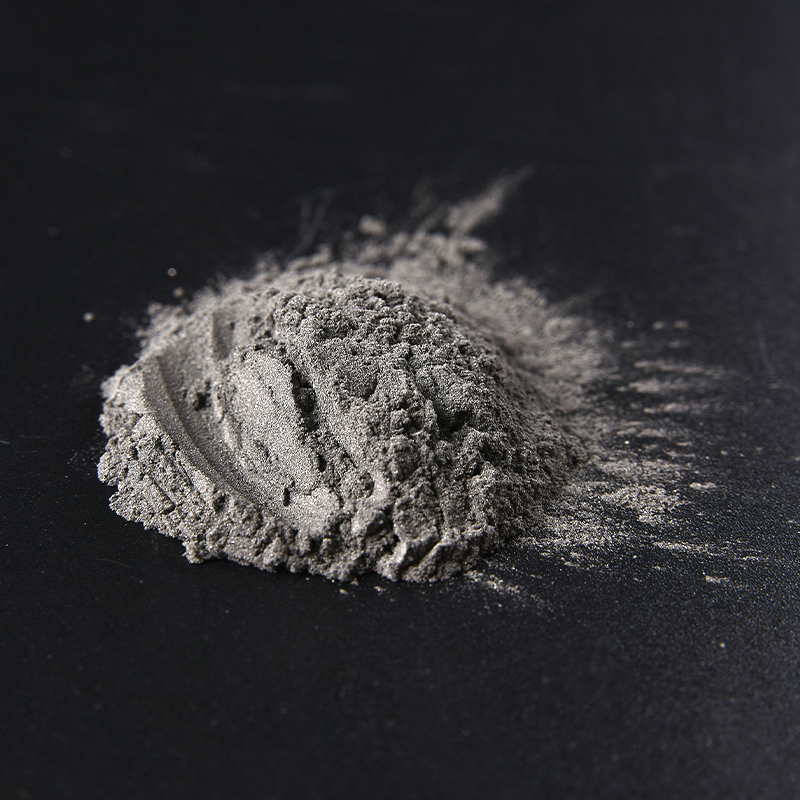
Metal alloy powder is a granular material in which two or more metallic elements are combined into an alloy and then converted into powder with a controlled particle size range. Depending on how the chemistry is distributed, buyers typically encounter three categories:
- Pre-alloyed powder — every particle carries the target chemistry. This form is preferred for additive manufacturing and thermal spray because composition segregation is minimized.
- Blended elemental powder — pure metal powders are mixed to a nominal composition. The alloy forms during sintering, making this route common in press-and-sinter powder metallurgy.
- Master alloy powder — a concentrated alloy formulation added to a base metal to adjust chemistry without disturbing the main composition.
For critical structural parts, pre-alloyed powder is normally the first choice. Across all categories, one rule applies: finished powder inherits the purity of the metal it comes from, so the upstream purification step matters as much as the atomization step.
| Category | Chemistry uniformity | Typical applications | Key consideration |
|---|---|---|---|
| Pre-alloyed | Uniform within each particle | Additive manufacturing, thermal spray | Higher production cost |
| Blended elemental | Homogeneous after sintering | Press-and-sinter powder metallurgy | Segregation during handling |
| Master alloy | Concentrated additive | Composition adjustment | Dosing accuracy and mixing control |
Critical Specifications to Verify Before You Order
Buying metal alloy powder by grade name alone is risky. Four parameters decide whether the powder works in your process:
- Particle size distribution (D10, D50, D90) — controls layer thickness, packing density, and surface finish. A batch with a D50 of 45 µm behaves differently from one with a D50 of 25 µm.
- Oxygen and nitrogen content — measured in parts per million. In titanium alloys, oxygen above the declared limit reduces ductility and promotes cracking.
- Flowability — usually expressed as Hall flow in seconds per 50 grams. Poor flow creates uneven layer deposition in additive equipment.
- Apparent density and tap density — define how much powder fills a given volume and how uniformly it packs.
The table below lists typical acceptance ranges for AM-grade titanium alloy powder. Compare each incoming lot against the certificate of analysis instead of relying on the nominal grade.
| Parameter | Typical range | Impact on component |
|---|---|---|
| D10 | 15–25 µm | Fine particle control, handling safety |
| D50 | 30–55 µm | Layer thickness, build rate |
| D90 | 60–100 µm | Surface finish, resolution |
| Oxygen content | ≤ 1300 ppm ELI / ≤ 2000 ppm standard | Ductility, fatigue life |
| Hall flow | ≤ 30 s / 50 g | Powder feeding stability |
| Apparent density | 2.2–2.8 g/cm³ | Packing uniformity |
Production Methods and Their Effect on Powder Quality
The production route leaves a permanent fingerprint on the powder. Four methods dominate the metal alloy powder market:
- Gas atomization — a molten alloy stream is broken into droplets by inert gas. Chemistry control is good, but satellite particles are common.
- Plasma atomization — a metal wire is melted inside a plasma torch, producing highly spherical particles with low oxygen pickup.
- Hydride–dehydride (HDH) — a brittle hydride is crushed and milled, then dehydrogenated. Particle shapes are irregular, making this route less suitable for additive manufacturing.
- Mechanical alloying — repeated welding and fracturing in a ball mill; useful for alloys that are difficult to atomize, but oxygen pickup must be managed closely.
Oxygen pickup is typically highest with HDH and mechanical alloying and lowest with plasma atomization. The chart below compares typical oxygen levels for titanium powder made by these routes; lower values indicate cleaner material.
Before ordering, ask which production method was used, what oxygen specification is guaranteed, and whether a certificate of analysis is provided for every lot.
Where Metal Alloy Powder Is Used
Metal alloy powder serves industries that cannot tolerate variation. In aerospace, it appears in hot-section components, structural brackets, and repair cladding. In biomedical, it enables porous titanium and cobalt-chrome implants. In new energy, nickel and cobalt alloy powders support battery components and solid-oxide fuel cells. In semiconductors, high-purity powders feed thermal spray coatings and protective layers.
Nickel-based alloy powders deserve extra attention during sourcing. Irregular particles bridge in powder feeders and cause inconsistent flow; specifying a clean, well-graded nickel particle fraction helps stabilize blending and sintering results.
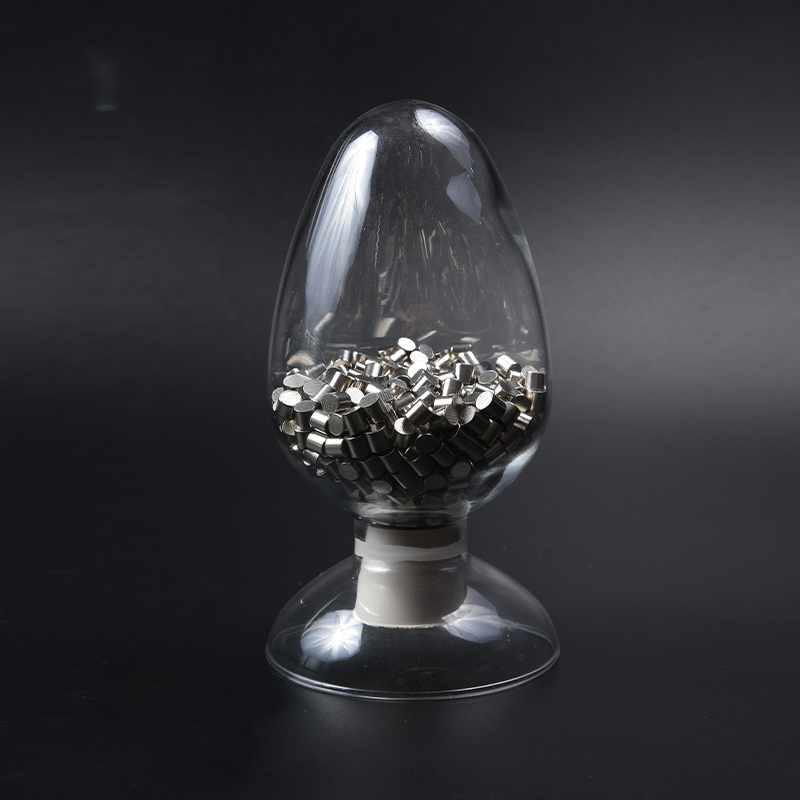 Ultra-High Purity Nickel Particles for Semiconductors and AerospaceThis nickel particle product offers 99.995-99.999% purity with customizable micron or nano sizes, addressing the flow and consistency concerns raised in the preceding paragraph on powder sourcing.View Product →
The chart below shows a typical breakdown of industrial metal alloy powder consumption by application.
- Additive manufacturing 38%
- Thermal spray 24%
- Powder metallurgy 20%
- Metal injection molding 10%
- Other applications 8%
Within titanium-based systems, aerospace applications of metal alloy powder currently demand the tightest oxygen limits and the most complete documentation.
Purity Starts with the Raw Metal
The term "metal alloy powder" hides an important upstream fact: powder inherits the purity of the metal used to make it. If the starting sponge, ingot, or crystal contains excessive oxygen or metallic impurities, no atomizer can remove them after melting.
Suppliers that control the full chain — purification, melting, casting, and processing — are better positioned to deliver consistent chemistry. High-purity titanium powder, for example, is produced from purified titanium rather than commercial-grade sponge. This is why experienced producers emphasize purity testing at the raw-material stage.
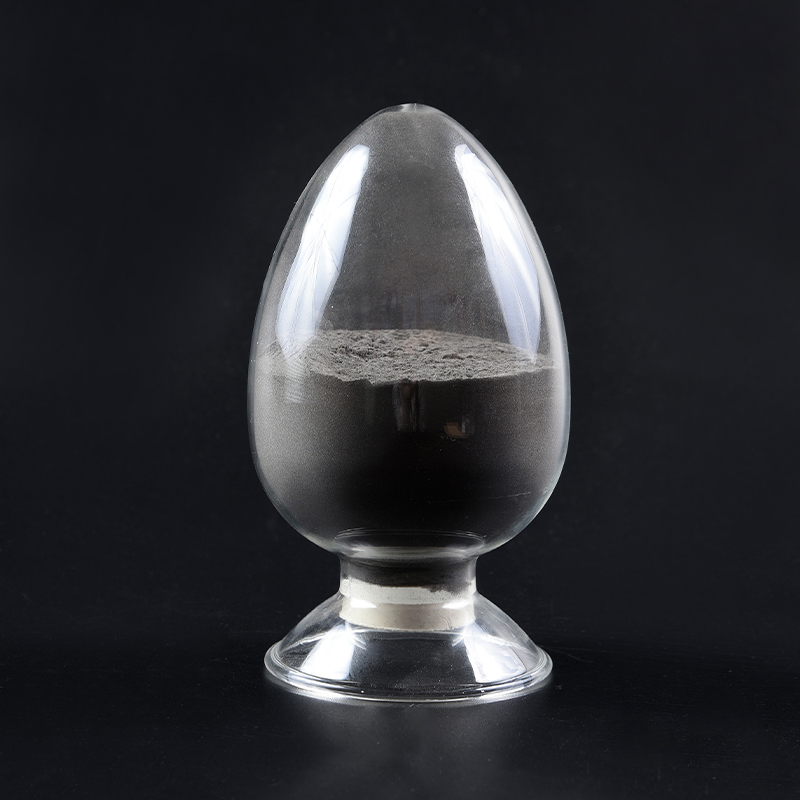 High-Purity Titanium Powder with Customizable Particle SizeProduced from purified titanium in grades from 99.8% to 99.99%, this powder supports particle size customization for 3D printing, MIM, and sputtering targets, aligning with the discussion on consistent chemistry and particle size distribution.View Product →
Particle size consistency is equally important. The cumulative curve below represents a typical AM-grade titanium alloy powder lot with a D50 near 45 µm; a steeper curve means a tighter distribution and more reproducible layer thickness.
TC4-ELI: A Practical Example
Titanium alloy TC4-ELI (Ti-6Al-4V ELI) is the most widely specified titanium alloy powder for critical structural applications. The "ELI" designation means extra low interstitials: oxygen, nitrogen, carbon, and hydrogen are controlled to lower maximums than in standard Ti-6Al-4V. The result is a better combination of strength and fracture toughness, especially in printed and welded components.
When you evaluate TC4-ELI powder, check oxygen content, particle size distribution, and lot traceability. Two lots with the same nominal grade can behave differently if the D50 shifts by only 10 µm or if oxygen drifts across the allowed range.
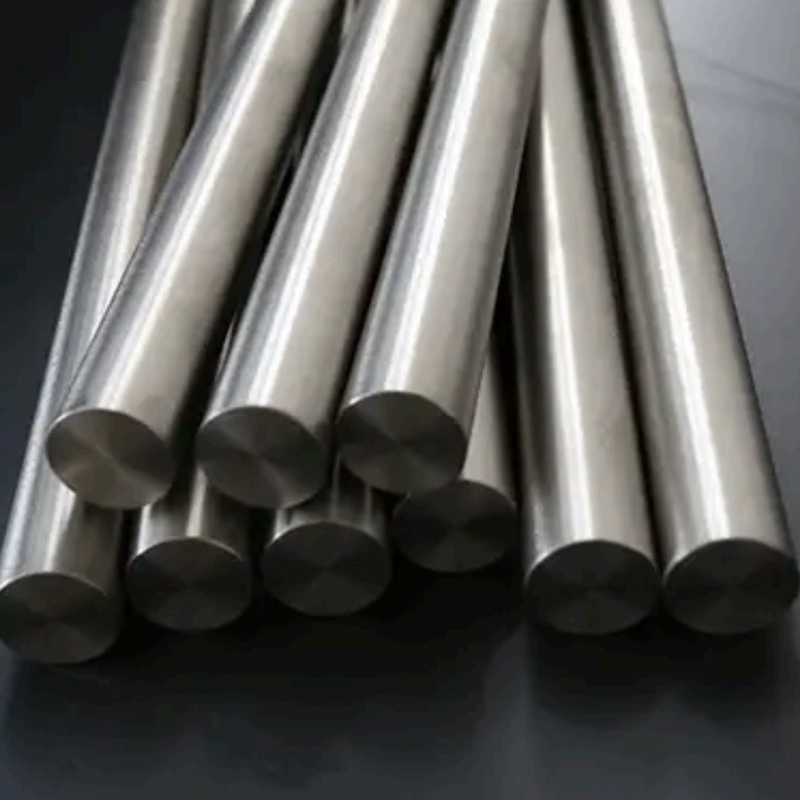 TC4 ELI Titanium Alloy for Aerospace and Medical ImplantsThis ultra-low interstitial grade of Ti-6Al-4V offers controlled oxygen and impurities for high fracture toughness. It is relevant for verifying oxygen content and lot traceability, as noted in the surrounding text.View Product →
For applications that do not require low-interstitial grades, standard titanium alloy powder still benefits from the same verification discipline. Define the acceptable oxygen ceiling, request the particle size distribution curve, and make the certificate of analysis part of the order contract.
How to Evaluate a Metal Alloy Powder Supplier
Price per kilogram is the last number a serious buyer should compare. The first questions should be:
- Does the supplier test every production lot and provide a certificate of analysis?
- Which quality management systems are in place? ISO 9001 and IATF 16949 certifications are meaningful signals for process control.
- Can the supplier state the production route and typical oxygen and nitrogen levels?
- How is the powder packaged and stored to prevent moisture pickup and cross-contamination?
- Does traceability extend from the raw metal to the finished powder?
A supplier that controls purification, melting, casting, and final processing across multiple production bases, and that treats purity testing as a standard service, is better positioned to guarantee batch-to-batch consistency. CRNMC operates five production bases in China and offers customer-side purity testing, which allows buyers to verify incoming lots against declared specifications.
Before committing to a volume order, request a sample lot, run your own particle size and oxygen tests, and build the same part on your production equipment to compare mechanical properties. Then discuss target specifications directly with the supplier.
For detailed specifications and lot-level testing options, contact the CRNMC technical sales team.
Frequently Asked Questions
What does D10, D50, and D90 mean in a powder data sheet?
These are percentile cut points of the volume-weighted particle size distribution. D50 is the median: half of the distribution is smaller and half is larger. A full specification includes all three values because two powders can share the same D50 while having very different fines and coarse fractions.
What is the difference between pre-alloyed and blended metal powder?
Pre-alloyed powder contains the full alloy chemistry inside each particle. Blended powder is a physical mixture of pure metal particles that alloy later during sintering. Pre-alloyed powder is generally preferred for additive manufacturing; blended powder is common in press-and-sinter processes.
How does oxygen content affect metal alloy powder performance?
Oxygen increases strength but reduces ductility and fatigue life, particularly in titanium alloys. Excessive oxygen promotes cracking in printed parts. Most AM specifications set an upper oxygen limit in parts per million and require per-lot testing.
Which metal alloy powder is best for additive manufacturing?
There is no universal answer. TC4-ELI is the most established titanium alloy powder for structural components, while nickel-based superalloy powders are common for high-temperature parts. Match the alloy chemistry and particle size distribution to your application and equipment.
Can high-purity starting metal improve the quality of metal alloy powder?
Yes. Impurities cannot be removed after atomization. Starting with high-purity titanium, nickel, or copper reduces oxygen and metallic impurity levels in the finished powder and tightens batch-to-batch consistency.