English
Electrode Metals: Types, Purity Grades, and How to Choose the Right One
Content
A plating line that switches copper anode suppliers can go from bright, ductile deposits to a grainy, brittle surface within a single shift. The rectifier settings have not changed. The bath chemistry has not changed. What changed is the metal itself, and specifically a few hundred parts per million of phosphorus, oxygen or sulfur dissolving out of the anode and into the electrolyte.
The short answer is that electrode metals are selected on four hard criteria: how well they carry current, how they behave in the specific electrolyte or plasma, whether they can contaminate the process, and whether the required physical form and purity can actually be delivered on schedule. Price and lead time follow from those four, not the other way round.
What an Electrode Metal Actually Has to Do
Every electrode, whether it sits in an electroplating tank, a lithium-ion cell, a sputtering chamber or a molten-salt electrolysis cell, performs the same basic job. It moves charge in or out of a medium without disintegrating, and without altering the chemistry of that medium. Four properties decide whether a given metal can do that job.
Conductivity sets the voltage budget
Annealed copper conducts at roughly 58 MS/m, nickel at about 14 MS/m and titanium at about 2.4 MS/m. That spread explains a great deal of electrode design practice. Titanium is an excellent corrosion material but a mediocre conductor, which is why dimension-stable anodes use a titanium substrate carrying a mixed-metal-oxide coating, and why large titanium electrodes are often copper-cored or bolted onto a copper busbar.
Corrosion behaviour is electrolyte-specific
No electrode metal resists everything. Titanium passivates into a stable oxide film in most oxidizing and neutral media, but it is attacked in reducing acids and in fluoride-bearing solutions. Nickel performs well in hot potassium hydroxide, which is why it dominates alkaline water electrolysis. Copper in an acid copper sulfate bath is meant to dissolve anodically; that is the whole point of a soluble anode. Niobium and tantalum resist most mineral acids and stay dimensionally stable at temperature, which is why they appear in capacitors, chemical-process electrodes and other aggressive service.
Contamination is measured in parts per million
What separates an electrode-grade metal from a general-purpose one is usually the trace element list. Copper anodes are specified for sulfur, arsenic, antimony, bismuth, iron and, depending on the bath, controlled phosphorus. Nickel is judged on sulfur and carbon, both of which affect anode dissolution and the quality of the deposit. Titanium for sputtering and electrochemical use is judged largely on oxygen, which raises resistivity, increases hardness and changes the way the metal erodes. A headline purity figure of 99.99% tells you the total, but not whether the remaining 0.01% is harmless or fatal to your process.
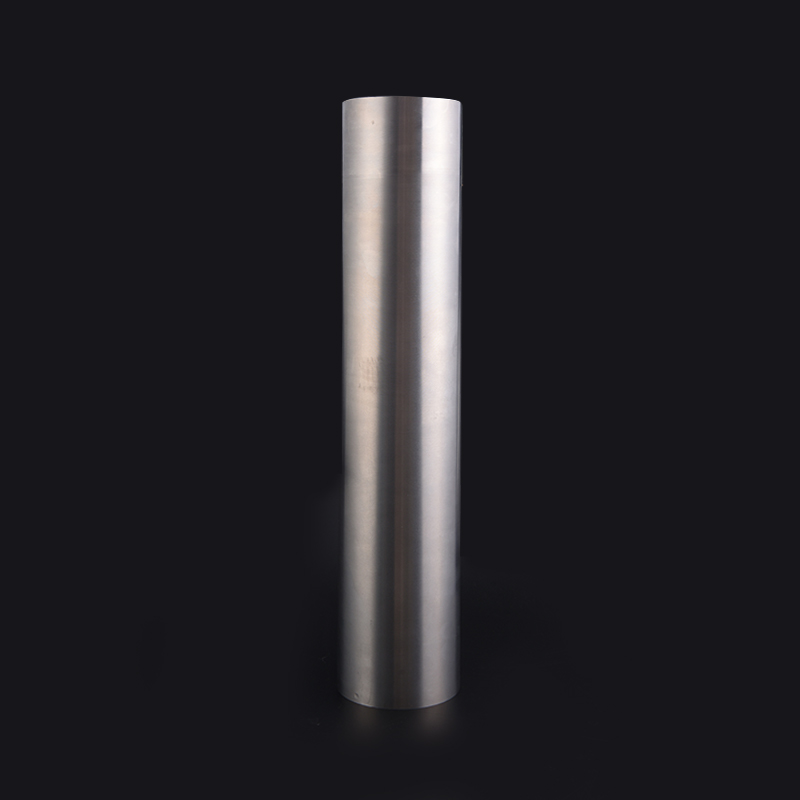 High-Purity Nickel Ingots for Semiconductor and Vacuum CoatingHigh-purity nickel ingots with controlled trace elements, customizable cutting and up to 2 t per ingot, suited to semiconductor deposition target materials and vacuum coating.View Product →
Form and mechanical stability
Electrode metals are supplied as crystals, ingots, billets, plates, sheets, rods, tubes, powders, particles, sponge and sputtering targets. Each form comes from a different process route and carries its own lead time. A 6 mm rolled plate and a 100 mm cast ingot may share the same chemistry, but they are not interchangeable, and a specification written around one will not be filled by the other.
Purity Grades: Where the Real Cost Sits
Three-nines (99.9%), four-nines (99.99%) and five-nines (99.999%) are not marketing tiers. Each step removes roughly an order of magnitude of impurity, and each step usually adds one or more process stages: electrolytic refining, vacuum induction melting, electron-beam melting, vacuum arc remelting. The analytical work needed to prove the result tends to grow with it. That is why the price curve is steep rather than linear.
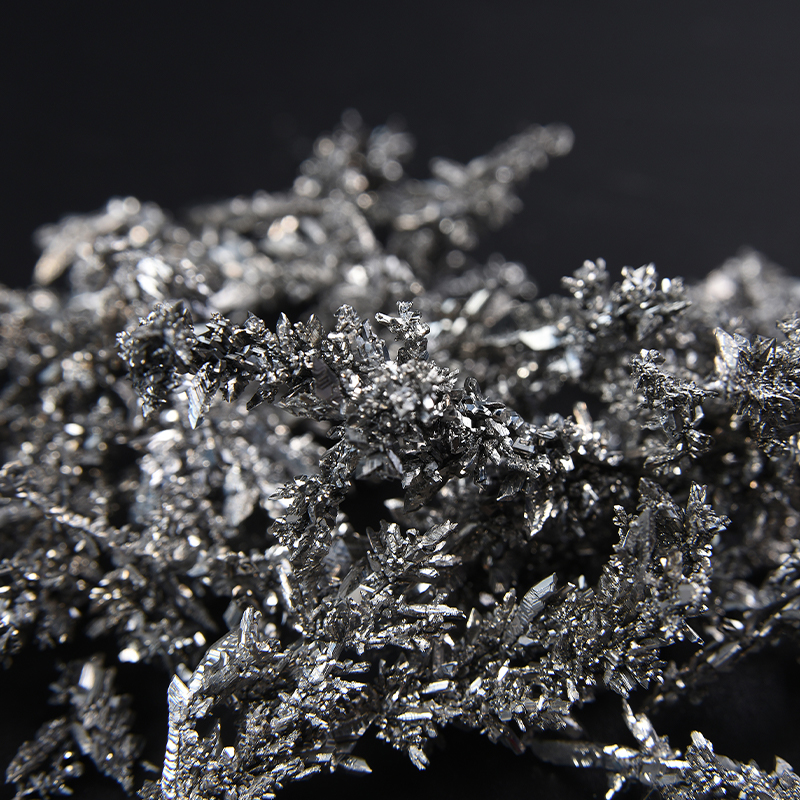 Single-Crystal Titanium for Semiconductor Targets and Aerospace ResearchSingle-crystal titanium with 99.98–99.99% purity and customizable dimensions, used for sputtering targets, semiconductor films, and aerospace materials research.View Product →
The practical trap is specifying a purity number without specifying how it will be verified. A certificate that states 99.99% but does not name the analytical method, most often glow discharge mass spectrometry or inductively coupled plasma mass spectrometry, leaves the important question unanswered: which elements were measured, and at what detection limit? Buyers qualifying material for semiconductor or aerospace programmes should ask for the element-by-element report rather than a summary figure.
Oxygen is the most widely misunderstood impurity in titanium. In a sputter target it changes the crystal structure and the erosion profile; in a substrate it hardens the surface and can embrittle it. In copper the logic often runs the other way, because oxygen-free copper is not automatically the better plating anode: a small, controlled phosphorus addition improves the way the anode dissolves and keeps anode slime away from the cathode.
A Buyer's Checklist Before You Commit
Most electrode failures trace back to a specification written before the process was understood. Work through the following in order and the rest of the purchasing decision becomes considerably simpler.
- Start from the electrolyte, not the metal. Record the chemistry, temperature, current density and expected service life before opening a catalogue.
- State purity together with the analytical method. Ask for the element list and the detection limits, and keep that report with the batch number.
- Match the form to the process. A tube, a rod, a plate and a crystal of the same metal solve different problems and carry different tooling and lead times.
- For sputtering targets, add grain size and texture to the specification. Uniform grain and controlled texture give a stable erosion profile and more consistent film thickness.
- Confirm the quality system behind the certificate. ISO 9001 and IATF 16949 certification, batch traceability and documented purity testing are the baseline for supply into regulated industries.
- Validate with a sample batch. A pilot order run on production equipment costs far less than reworking a full production lot.
Sectors with strict acceptance requirements, from aerospace components to biomedical implants and flat-panel display coatings, typically push all six steps back onto the supplier as documentation. A manufacturer that controls purification, melting, casting and machining under one roof shortens that loop, because composition and form stay inside one quality system instead of being handed between vendors.
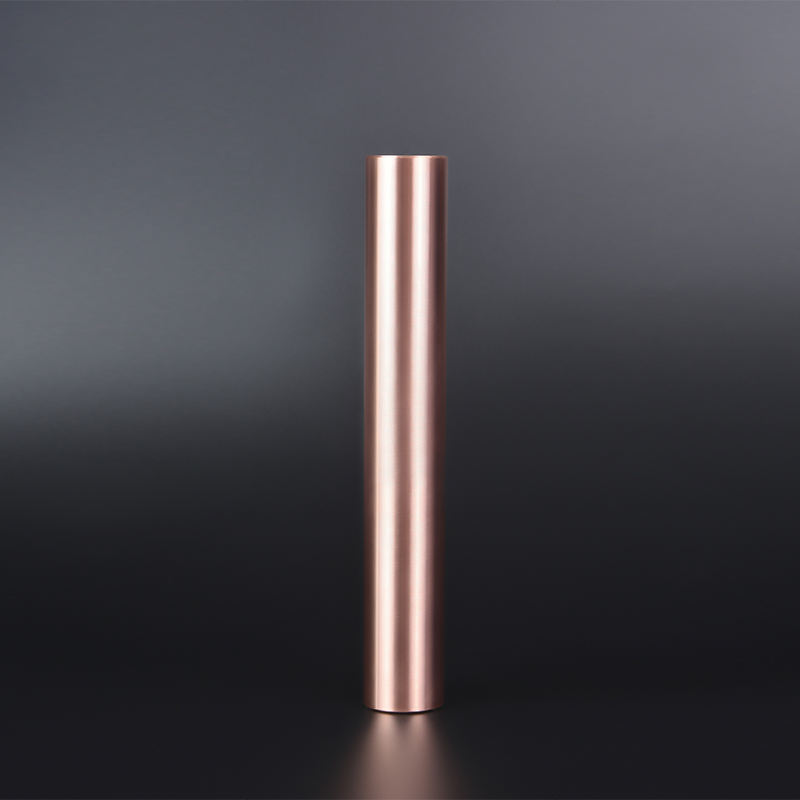 High-Purity Copper Ingots for Semiconductor and Display ManufacturingHigh-purity copper ingots from 4N to 7N, with low oxygen and sulfur, for sputtering targets, bonding wires, TFT wiring, and display components.View Product →
Frequently Asked Questions
Are graphite electrodes cheaper than metal electrodes?
For arc furnaces and low-current electrolysis, graphite usually costs less up front. The trade-off is that it erodes, sheds particles into the bath and is replaced on a consumption schedule rather than a wear limit. Coated titanium electrodes cost more initially but hold their dimensions and coating life far longer.
Can the same metal serve as both anode and cathode?
Rarely with the same result. Copper works as an anode precisely because it dissolves; in the same bath, as a cathode, it will plate. Titanium passivates when it is made anodic, so it is an excellent cathode and substrate but a poor soluble anode. Where both polarities are needed, most designs pair a soluble or catalytic anode with a stable, inert cathode.
Does a higher purity grade always perform better?
No. It depends on where the impurity sits and what the electrode has to do. Controlled phosphorus improves the dissolution behaviour of copper anodes, while oxygen in a titanium target is almost always harmful. Buy to the function and the verified element list, not to the largest number on the certificate.
Electrode metals are a component decision with a process consequence. The metal you choose sets the voltage budget, the contamination risk and the service life; the purity grade and the analytical report decide whether that choice survives production. Specify the function first, verify the chemistry second, and let the price follow from there.