English
high purity products: Applications, Selection Criteria, and Practical Guidance
Content
A production engineer once rejected a batch of titanium targets because the oxygen level drifted two parts per million above the internal limit. The supplier’s certificate said “99.99% pure,” but that headline number told almost nothing about the impurities that mattered for the sputtering process. That gap between a marketing grade and a functional specification is where most high-purity product problems begin.
High-purity products are not defined by a single percentage; they are defined by which impurities are controlled, at what limits, and how consistently those limits hold from lot to lot. For metals such as titanium, nickel, copper, niobium, cobalt, tantalum, and molybdenum, the practical questions are usually about oxygen, nitrogen, carbon, iron, and trace refractory elements—plus the test method behind the number. The conclusion is straightforward: specify the critical impurity, the acceptable range, and the verification method before you compare prices.
What “High Purity” Actually Means for Metal Products
In metals, purity is usually expressed as a percentage or a grade such as 4N (99.99%) or 5N (99.999%). But two suppliers can quote the same grade and still deliver very different material. The difference is often in the impurity profile: one lot may have low oxygen but higher iron; another may reverse those values. For a semiconductor target, oxygen and gas content may dominate. For a biomedical component, trace elements and inclusion control may matter more.
That is why experienced buyers ask for a certificate of analysis with element-by-element limits, not just a single purity figure. They also ask which analytical method was used—GDMS, ICP-MS, or combustion analysis—because different methods have different detection limits and sample preparation effects. A 5N claim without method detail is a starting point, not a purchase justification.
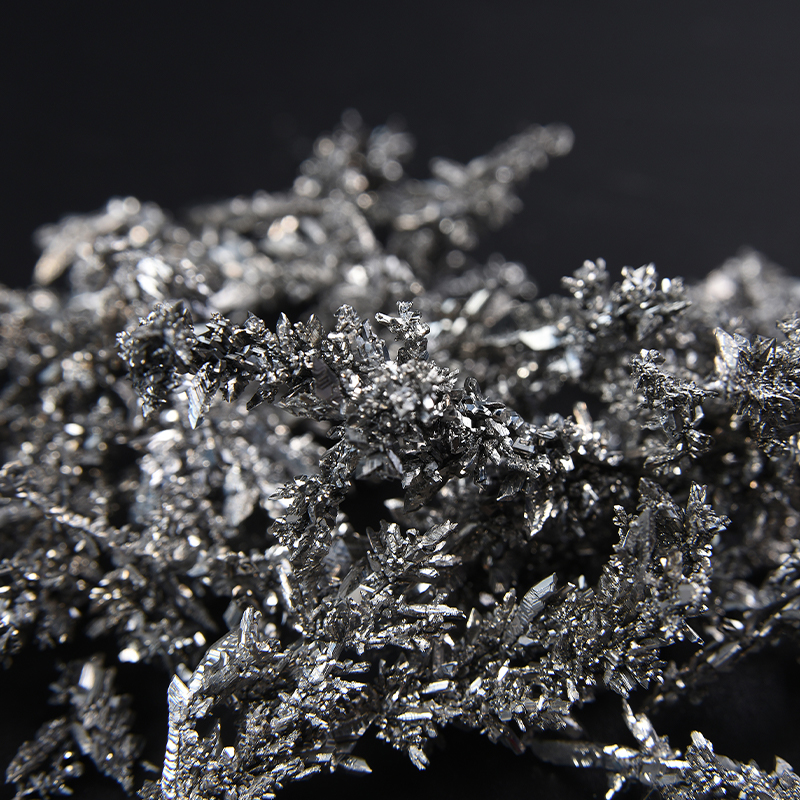 High-Purity Single-Crystal Titanium for Semiconductor and Aerospace ResearchSingle-crystal titanium at 4N8–4N9 purity supports impurity-sensitive semiconductor targets and aerospace materials research; compare element limits and analytical methods.View Product →
Consider titanium crystal used in electronic-grade applications. The useful specification might regulate oxygen, nitrogen, carbon, iron, and silicon separately, with each limit tied to the downstream process. When you evaluate high-purity products, compare the full impurity table rather than the largest number on the first page.
Table 1 gives a simplified view of how purity bands translate into practical attention points. The numbers are illustrative; actual limits depend on the metal, form, and supplier capability.
| Grade | Nominal purity | Typical critical impurities | Common product forms |
|---|---|---|---|
| 4N | 99.99% | O, N, C, Fe, Si | Ingot, plate, powder, tube |
| 5N | 99.999% | O, N, C, trace metals | Crystal, target, high-purity powder |
| 6N | 99.9999% | Gas elements, refractory traces | Specialty target, electronic-grade crystal |
Where High-Purity Products Earn Their Cost
High-purity metals show up in processes where a small impurity can change an electrical property, a corrosion path, or a biological response. In semiconductor manufacturing, sputtering targets must maintain consistent film resistivity and low particle generation; a variation in oxygen or argon content can shift film stress. In aerospace, tantalum and niobium components are selected for corrosion resistance and high-temperature stability, so trace interstitial elements matter as much as the base metal.
Biomedical devices add another layer: not only must the metal meet mechanical requirements, but the impurity profile must be documented for biocompatibility and traceability. Flat-panel display and solar applications care about target density, grain structure, and gas content because these affect deposition uniformity. New-energy systems often prioritize conductivity and cycle life, which makes copper and nickel purity a functional requirement rather than a cosmetic one.
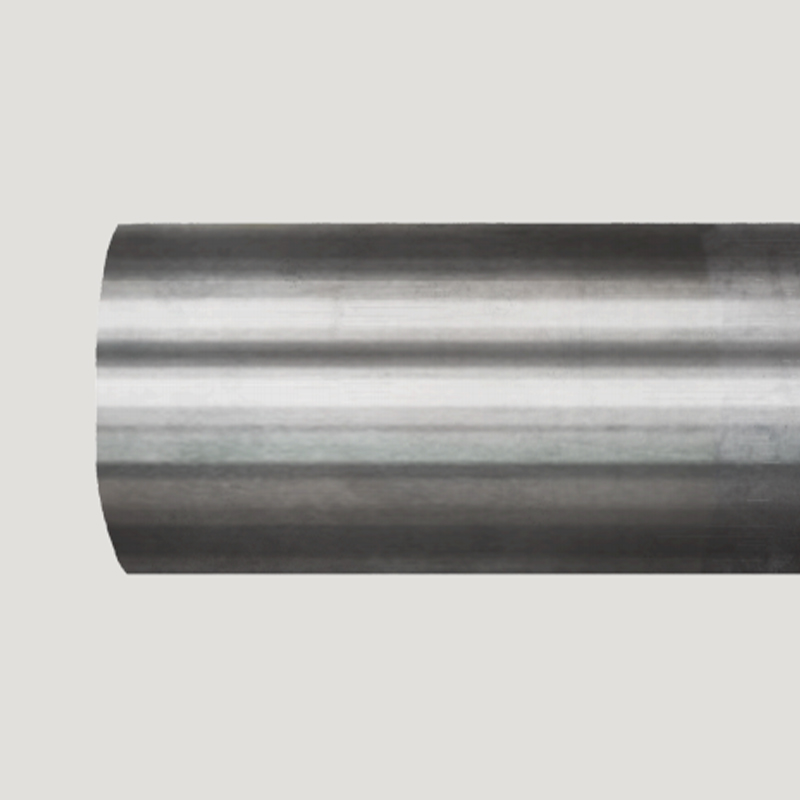 High-Purity Tantalum Ingot for Superalloys and Aerospace Components4N tantalum ingot serves as a base material for superalloy additives and high-temperature aerospace parts; specify interstitial limits and melt practice.View Product →
For aerospace and high-temperature work, a tantalum ingot may be specified by interstitial limits, melt practice, and ultrasonic inspection results. The same logic applies across the product family: the industry sets the critical impurity, and the supplier’s process control determines whether that impurity stays inside the window. Buyers who understand the application can usually narrow the specification to the few elements that actually drive performance—and avoid paying for unnecessary purity in the wrong dimension.
Semiconductor and display customers often ask for more than a mill certificate; they ask for lot-specific traceability, packaging controls, and repeatable surface condition. You can see how these requirements map to industry segments on the semiconductor industry page.
How to Specify High-Purity Products Without Overpaying
The most expensive mistake in high-purity purchasing is specifying a headline grade without defining the functional impurity. A 5N titanium powder with uncontrolled oxygen may underperform a well-controlled 4N powder in a pressing and sintering route. The reverse is true in a target application where gas content dominates. Start with the failure mode: what property changes if impurity X rises or falls? Then set the limit around that property, not around a catalogue page.
Use this checklist when writing a purchase specification:
- Identify the critical impurity and its allowable range, not just the nominal purity.
- State the test method and sampling plan—GDMS, ICP-MS, combustion, or a combination.
- Define the product form and consolidation route: crystal, ingot, plate, powder, target, tube, or rod.
- Specify dimensional tolerances, surface finish, and packaging that protect the surface from contamination.
- Require lot traceability and a certificate of analysis that reports actual values, not only pass/fail statements.
 High-Purity Copper Target for PVD Sputtering5N–6N copper target deposits conductive films in semiconductor, display, and optical coating processes; review purity, grain, and bonding specifications for deposition.View Product →
Take copper targets as an example. A buyer may focus on copper purity, but the deposition performance also depends on oxygen content, grain size, bonding quality, and surface cleanliness. If the target is bonded to a backing plate, the bond interface and thermal cycling behavior belong in the specification too. The same principle applies to titanium tubes, nickel ingots, niobium rods, and cobalt-based products: match the form to the process, then match the impurity limits to the failure mode.
Another practical lever is tolerance stacking. High-purity products often carry tight dimensional tolerances because downstream tooling is sensitive to fit. If you can accept a slightly wider tolerance on a non-critical surface, you may reduce cost without affecting performance. But do not relax cleanliness or packaging requirements unless you have tested the effect; surface contamination can erase the benefit of high base-metal purity.
Quality Signals That Separate Reliable Suppliers
Suppliers of high-purity products should be able to show process control, not just a certificate. Look for a documented quality management system, such as ISO 9001, and for automotive or aerospace-adjacent programs, IATF 16949. Ask how the supplier controls contamination between melting, casting, machining, and packaging. Ask whether purity testing is performed in-house or by an accredited laboratory, and how often instruments are calibrated.
- Lot-specific certificates with actual impurity values and test methods.
- Traceability from raw material to finished form, including cleaning and packaging records.
- Process capability data for critical impurities, not just final inspection.
- Clear handling and packaging controls for oxygen-sensitive or surface-sensitive products.
- Engineering support that can translate an application failure mode into a material specification.
CRNMC, for example, operates purification, melting, casting, and machining steps across multiple production bases and maintains ISO 9001 and IATF 16949 certification. Its team includes metallurgists and materials engineers who work with customers on grade selection and form conversion. That kind of vertical integration can shorten the feedback loop between a specification and a production lot, which matters when a critical impurity sits near the limit.
If you are comparing suppliers, send the same application note and the same critical impurity list to each one. Then compare the responses: who asks about the downstream process, who provides method details, and who can show data from previous lots. For a direct conversation about your material specification, contact the technical team.
FAQ: High-Purity Products
What does 4N or 5N purity mean?
4N means 99.99% nominal purity; 5N means 99.999%. The designation describes the total impurity allowance, but it does not tell you which impurities are controlled. Always review the element-by-element limits and test method.
How do I verify the purity of a metal lot?
Request a certificate of analysis with actual measured values and the analytical method used. For critical applications, consider third-party verification or an agreed-upon sampling plan. GDMS and ICP-MS are common for trace metals; combustion methods are common for oxygen, nitrogen, and carbon.
Can high-purity metals be supplied in custom forms?
Yes. Common forms include crystal, ingot, billet, plate, powder, sponge, target, tube, rod, and chopped pieces. The form affects contamination risk and handling, so specify packaging and surface protection alongside the purity limits.
Why does oxygen matter so much in titanium and tantalum?
Oxygen is an interstitial element in these metals and can raise hardness, reduce ductility, and change electrical or corrosion behavior. Even a small increase can shift a downstream process, so oxygen limits are often tighter than the headline purity number suggests.
Is a higher purity grade always better?
Not necessarily. The best grade is the one that controls the impurities that affect your process at the lowest total cost. Over-specifying can add cost and lead time without improving yield, while under-specifying can cause hidden scrap.
High-purity products reward buyers who think in impurity profiles, test methods, and process fit. Start with the failure mode, define the critical limits, and ask for data that shows consistency across lots. When a supplier can connect metallurgical control to your application, the purity number becomes a useful shorthand—not the whole story. The next step is to put your critical impurity list into a written specification and test it against the supplier’s certificate before the first production order.