English
Understanding Alloy Chemical Composition of High-Purity Metals for Advanced Engineering
Content
- 1 Alloy Chemical Composition: The Core Variable
- 2 How Alloy Chemical Control Affects Real-World Performance
- 3 Alloy Chemical Precision in Aerospace and Defense
- 4 The Role of Alloy Chemical Analysis in Quality Assurance
- 5 Frequently Asked Questions About Alloy Chemical Composition
- 6 The Bottom Line on Alloy Chemical Control
When a turbine blade fails mid-flight or a semiconductor deposition target produces inconsistent films, the first place engineers look is the alloy chemical composition. A variation of just 0.1% in a minor element can shift melting point, degrade corrosion resistance, or create embrittlement in a high-stress component. For manufacturers producing everything from jet engine casings to orthopedic implants, the chemical makeup of the metal is not a specification on a datasheet; it is the fundamental boundary between reliability and failure.
Alloy Chemical Composition: The Core Variable
Every metal part begins as a liquid mixture. The elements that enter that melt determine how the material behaves when cast, rolled, forged, or machined. An alloy is not just a blend of metals; it is a precisely controlled combination of base metal and alloying additions. For example, the alloy chemical composition of TC4 ELI (Ti-6Al-4V Extra Low Interstitial) includes 6% aluminum and 4% vanadium, plus tightly regulated levels of oxygen, nitrogen, and iron. Remove that control and the material loses its certified biocompatibility and fatigue strength.
How Alloy Chemical Control Affects Real-World Performance
The relationship between alloy chemical composition and final properties is not linear. Small shifts produce outsized effects. In nickel-based superalloys used in gas turbines, reducing carbon from 0.08% to 0.01% can improve hot corrosion resistance but decrease creep strength. Engineers therefore specify exact ranges, and suppliers must demonstrate consistent control across every heat.
| Alloy Type | Key Elements | Typical Application |
|---|---|---|
| Ti-6Al-4V (TC4 ELI) | Al 5.5–6.5%, V 3.5–4.5%, O ≤0.12% | Aerospace, biomedical implants |
| Pure Nickel (Ni 200/201) | Ni ≥99.0% | Chemical processing, electronics |
| Niobium stabilised steel | Nb 0.02–0.05% | Pipeline, automotive sheet |
The table above shows that even in a single alloy family, minor element control is non-negotiable. For high-purity metals, eliminating interstitial elements like oxygen, nitrogen, and carbon becomes a competitive advantage because those elements directly impair ductility and corrosion resistance.
Alloy Chemical Precision in Aerospace and Defense
In aerospace, every gram of material is scrutinized and every percentage point of alloy composition is certified. Aircraft structural components, landing gear, and engine parts are made from alloys whose chemical boundaries are defined by international standards such as AMS and ASTM. A common requirement is that the alloy chemical composition of titanium used in airframes must not deviate beyond ±0.2% for major elements. Suppliers that deliver consistent chemistry reduce scrap rates and shorten certification lead times.
Ningbo Chuangrun New Materials Co., Ltd. (CRNMC) supports this supply chain by producing high-purity metals and alloys with documented trace element control. Their titanium alloy 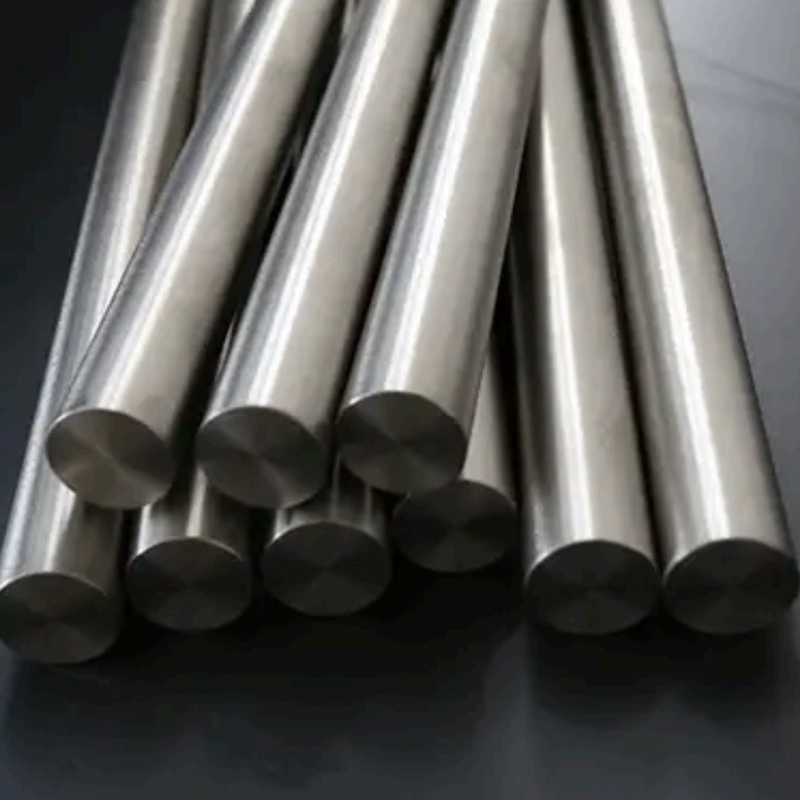 Ultra-Low Interstitial Ti-6Al-4V ELI Titanium AlloyThis titanium alloy variant features tightly controlled oxygen, nitrogen, and hydrogen levels for superior fracture toughness and fatigue resistance. It is produced under ISO9001 and IATF16949 quality management, making it suitable for aerospace load-bearing components and biomedical implants that demand trace element documentation.View Product → is produced under ISO9001 and IATF16949 quality management, ensuring that each batch meets the tight composition tolerances required for aerospace and biomedical applications.
The Role of Alloy Chemical Analysis in Quality Assurance
Verification is as important as production. After melting, casting, and forming, each batch undergoes chemical analysis using methods like optical emission spectrometry (OES) or glow discharge mass spectrometry (GDMS). The data is reported as a certificate of conformance and must match the specified alloy chemical composition range.
At CRNMC, in-house purity testing facilities allow for rapid feedback loops. When a supplier can measure its own chemistry internally, it shortens the time between melt and finished product, while also giving the buyer confidence that the delivered material contains no hidden elements. For example, in high-purity copper used in semiconductor sputtering targets, the combined impurity content must be below 10 ppm. This level of precision demands that the entire supply chain control its alloy chemical composition from the ingot stage onward.
The consequence of inaccurate alloy chemical control is expensive. A single heat of nickel alloy that falls outside the specification range for silicon or manganese may be downgraded to a lower grade or scrapped entirely. Buyers working with experienced suppliers eliminate that risk.
Frequently Asked Questions About Alloy Chemical Composition
Why does the alloy chemical composition matter more than the alloy name?
Grade designations like Ti-6Al-4V or Ni 200 only define nominal composition. Actual production chemistry can vary within the allowed range, and that variation affects mechanical and corrosion properties. Buyers should request certificates of analysis to see the exact composition of their batch.
How are trace elements controlled in high-purity alloy production?
Controlling trace elements requires careful selection of raw materials, inert or vacuum melting environments, and rigorous pouring practices. Impurities from the crucible, atmosphere, or previous melts must be avoided. Companies that specialize in ultra-high-purity metals, such as CRNMC, typically use vacuum arc remelting or electron beam melting to minimize contamination.
Can I substitute one alloy for another if the chemical composition overlaps?
Not recommended. Even if the weight percentages of major elements are similar, minor elements often have different effects on heat treatment response, toughness, and weldability. Always use the exact alloy specified by the design engineer.
The Bottom Line on Alloy Chemical Control
Engineers and procurement professionals should treat alloy chemical composition as a primary specification, not a secondary detail. The difference between a successful production run and a costly rework often comes down to whether the delivered metal stays within its allowable chemistry window.
For industries that demand reliability, from aerospace to biomedical to semiconductor manufacturing, selecting a supplier with in-house purity testing, documented quality systems, and a proven track record in high-purity alloy production is a direct way to reduce risk. When you need to verify the alloy chemical composition of your next batch, look for producers that provide full traceability and real-time analysis.
Understanding the science behind alloy chemical composition enables better material selection, fewer field failures, and longer product life. Whether you are specifying a nickel alloy for a combustion environment or a titanium alloy for a load-bearing implant, the chemical numbers on the datasheet tell the real story.